Welcome to the Jungle of Bookkeeping: Are You Navigating It Correctly?
Imagine this: it’s 2024, and you’re trying to keep your business’s financial ship afloat amidst a sea of receipts, invoices, and digital transactions. Sound familiar? Well, you’re not alone. Every small business owner has faced this daunting task, often wishing for a magic wand. The good news? With the right bookkeeping strategies and QuickBooks support tips, you can transform chaos into clarity.
Why Bookkeeping Isn’t Just About Numbers—It’s Your Business’s Lifeline
Let’s face it: bookkeeping is the unsung hero of your financial health. It’s not glamorous, but neglect it, and your business could be sailing toward disaster. According to Investopedia, accurate record-keeping is the backbone of successful financial management. So, how do you ensure your bookkeeping game is on point in 2024?
QuickBooks Support: Your Secret Weapon or Just Another Software?
QuickBooks has become the standard for small business accounting, but many users find themselves scratching their heads over its features. Here’s the trick: leverage dedicated QuickBooks support to streamline your processes. For instance, check out AcurateAccounting’s QuickBooks support solutions—they’re like having a financial Swiss Army knife at your fingertips.
Is Your Bookkeeping Strategy Future-Proof?
It’s a question worth pondering. As technology evolves, so do the tools and techniques for efficient bookkeeping. Are you keeping up with the latest best practices? Or are you stuck in the past, risking errors and missed opportunities? The answer lies in continuous learning and embracing support resources designed for 2024, such as the comprehensive effective bookkeeping and QuickBooks support strategies.
If you haven’t already, consider scheduling a consultation with expert CPAs who specialize in tax filing and bookkeeping. They’ll help you avoid common pitfalls and set you up for success, just like the top-tier services offered by AcurateAccounting’s CPA services.
Remember, mastering your bookkeeping isn’t just about compliance; it’s about empowering your business to thrive. So, what’s your next move? Dive into the wealth of support options, keep your records impeccable, and stay ahead of the curve. Your financial health depends on it!
Could Your Bookkeeping Techniques Stand the Test of Time and Technology?
In the ever-evolving landscape of financial management, small business owners often wonder if their bookkeeping practices are truly future-proof. With new tools, regulations, and best practices emerging rapidly, staying ahead requires more than just the basics. Are you leveraging the latest resources and support systems to keep your financial records accurate and compliant in 2024?
The Power of Continuous Learning and Expert Support
As highlighted by Investopedia, ongoing education and expert guidance are vital for maintaining reliable bookkeeping. Partnering with professional CPAs and utilizing reliable support platforms like AcurateAccounting’s strategic support can make a significant difference. These resources help you adapt to changing standards and technological advancements, ensuring your financial data remains precise and actionable.
What innovative tools or support systems could revolutionize your bookkeeping in 2024?
Think about integrating automation, AI-driven analytics, or cloud-based solutions that synchronize seamlessly with your existing systems. Not only do these tools reduce manual errors, but they also provide real-time insights, empowering smarter decision-making. For example, exploring comprehensive QuickBooks support options can enhance your efficiency and accuracy significantly.
Moreover, engaging with trusted accounting professionals through services like AcurateAccounting’s top CPA services ensures your tax filings and financial reports are compliant and optimized for 2024’s regulations. This partnership can help identify overlooked deductions, manage audit risks, and streamline your tax season.
Want to stay ahead? Regularly review your bookkeeping processes against industry standards and emerging trends. Consider subscribing to authoritative sources, participating in webinars, or attending workshops focused on financial best practices. Staying informed and proactive is your best defense against costly errors or compliance issues.
Finally, don’t forget to leverage community insights. Sharing experiences and strategies with fellow entrepreneurs can uncover innovative ideas and practical solutions that you might not discover alone. Join online forums, local business groups, or social media communities centered on financial management for small businesses.
Are you ready to elevate your bookkeeping game and embrace the tools and support systems that will define success in 2024? Dive deeper into these strategies and share your insights or questions in the comments below. Remember, mastering your finances today sets the foundation for a prosperous tomorrow!
Leveraging AI and Automation: The Next Frontier in Bookkeeping Precision
In the rapidly evolving landscape of financial management, artificial intelligence (AI) and automation are no longer optional—they are essential for maintaining accuracy and competitive advantage. Leading firms like PwC emphasize that integrating AI-driven tools can significantly reduce manual errors, optimize reconciliation processes, and provide predictive insights that inform strategic decisions. For instance, machine learning algorithms can analyze historical transaction data to flag anomalies, forecast cash flow, and even suggest optimal tax strategies, transforming reactive bookkeeping into proactive financial planning.
How can small businesses effectively implement AI without overwhelming their existing systems?
Start by assessing your current infrastructure and identifying pain points where automation can deliver immediate value. Cloud-based platforms like QuickBooks Online now offer integrated AI modules that automate data entry, categorize expenses, and generate real-time financial reports. Partnering with consultants experienced in AI integration can facilitate seamless deployment, ensuring that your team is trained to interpret AI-driven insights and leverage them for strategic growth. Additionally, staying compliant with evolving data privacy standards, such as GDPR and CCPA, is crucial when implementing these technologies—consult legal experts to craft a secure, compliant framework.
Advanced Reconciliation Techniques: From Manual to Machine Learning-Enhanced Processes
Traditional reconciliation methods are time-consuming and prone to human error, especially as transaction volumes grow. Modern solutions incorporate machine learning to automate and enhance this process, comparing vast datasets swiftly and accurately. For example, AI algorithms can automatically match bank statements with ledger entries, flag discrepancies, and even suggest corrective actions—saving hours of manual labor while increasing reliability.
According to a detailed report by McKinsey & Company, organizations integrating machine learning into reconciliation workflows report a 40-60% reduction in processing time and a significant decrease in reconciliation errors. This shift not only enhances accuracy but also frees up valuable human resources for more strategic tasks like financial analysis and forecasting.
What are the practical steps for transitioning from traditional reconciliation to AI-powered systems?
Begin with pilot projects focusing on high-volume, repetitive transactions. Use these pilots to evaluate the accuracy, speed, and user-friendliness of AI tools. Develop comprehensive training programs to upskill your finance team, emphasizing interpretation of AI outputs and troubleshooting. It’s also wise to establish clear data governance policies to safeguard sensitive financial information and ensure compliance with relevant standards. Over time, expand the deployment across all reconciliation processes, continuously monitoring performance metrics and adjusting workflows accordingly.
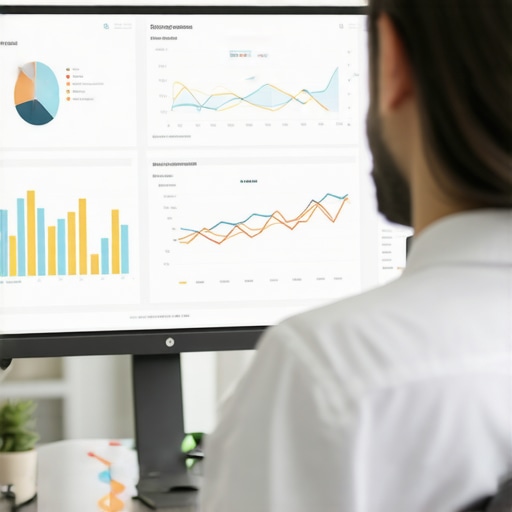
Image Prompt: A professional accountant reviewing AI-driven financial reconciliation dashboard on a modern computer monitor, with charts and data points, in a sleek office setting.
Image Alt: Accountant analyzing AI-powered financial reconciliation dashboard in an office.
Image Title: AI-Enhanced Financial Reconciliation Dashboard
Unlocking the Power of Predictive Analytics for Smarter Financial Forecasting
As your business evolves, traditional bookkeeping methods may no longer suffice to provide the strategic insights necessary for sustained growth. Incorporating predictive analytics into your financial management arsenal allows you to anticipate cash flow fluctuations, optimize inventory levels, and identify emerging market trends before they become apparent. According to a report from Gartner, leveraging AI-driven forecasting tools can enhance decision-making accuracy by up to 35%, transforming reactive bookkeeping into proactive financial planning.
How can small businesses effectively integrate predictive analytics without overwhelming their existing systems?
Start by evaluating your current data infrastructure and pinpointing areas where predictive insights can create immediate value. Cloud-based platforms such as QuickBooks Online now offer integrated AI modules that facilitate predictive analytics, enabling you to generate forecasts based on historical data seamlessly. Partnering with specialized consultants can help tailor these tools to your unique business needs, ensuring smooth implementation and user adoption. Moreover, maintaining a focus on data privacy standards such as GDPR and CCPA during integration is crucial to protect sensitive financial information and uphold compliance.
Advanced Reconciliation Techniques: Harnessing Machine Learning for Precision
Manual reconciliation processes are becoming increasingly insufficient in the face of growing transaction volumes and complexity. The advent of machine learning-based reconciliation solutions automates matching transactions, detects anomalies, and suggests corrective actions with remarkable accuracy. For example, McKinsey highlights that organizations adopting AI-powered reconciliation report error reductions of over 50% and processing time cuts of nearly 70%, freeing valuable human resources for strategic analysis.
Implementing these advanced systems involves pilot testing on high-volume datasets, training your finance team to interpret AI outputs effectively, and establishing robust data governance policies to safeguard sensitive information. Over time, expanding AI-driven reconciliation across all accounts ensures your financial records remain impeccable and audit-ready at all times.

Image Prompt: A professional accountant reviewing AI-driven financial reconciliation dashboard on a modern computer monitor, with charts and data points, in a sleek office setting.
Image Alt: Accountant analyzing AI-powered financial reconciliation dashboard in an office.
Image Title: AI-Enhanced Financial Reconciliation Dashboard
Expert Insights & Advanced Considerations
1. Embrace AI-Driven Automation for Enhanced Accuracy
Leading financial professionals emphasize integrating AI and machine learning tools to automate routine bookkeeping tasks. This not only reduces human error but also provides real-time insights, enabling proactive decision-making. Technologies like AI-powered reconciliation and predictive analytics are transforming traditional bookkeeping into dynamic financial management systems.
2. Prioritize Data Privacy and Regulatory Compliance
With the surge of digital tools, safeguarding sensitive financial data is paramount. Staying updated on standards such as GDPR and CCPA ensures your bookkeeping practices remain compliant, avoiding costly penalties and safeguarding client trust. Collaborating with legal and cybersecurity experts can fortify your data governance frameworks.
3. Invest in Continuous Professional Development
Expertise in evolving bookkeeping technologies and regulations is crucial. Regular training sessions, webinars, and industry certifications keep your skills sharp, ensuring your practices remain efficient and compliant. Resources like AcurateAccounting’s support strategies serve as invaluable tools for staying ahead.
4. Leverage Cloud-Based Platforms for Scalability
Cloud solutions like QuickBooks Online offer scalability and integrated AI modules, facilitating seamless updates and collaboration. They enable small businesses to access advanced features previously reserved for larger enterprises, leveling the competitive playing field.
5. Incorporate Predictive Analytics for Strategic Forecasting
Beyond tracking past transactions, predictive analytics helps forecast cash flow, optimize inventory, and identify emerging market trends. This strategic foresight empowers businesses to adapt proactively rather than reactively, securing a competitive edge in 2024 and beyond.
Curated Expert Resources
- Investopedia: Offers comprehensive guides on financial management and the importance of accurate bookkeeping.
- Gartner: Provides insights into AI and analytics trends shaping the future of finance.
- PwC: Industry-leading research on AI integration and automation in financial processes.
- QuickBooks Support: Official platform offering tutorials and AI modules for small business accounting.
- McKinsey & Company: Reports on machine learning applications in reconciliation and financial accuracy.
Final Expert Perspective
Understanding the future of bookkeeping through expert insights reveals that integrating AI, prioritizing data security, and continuous learning are vital for maintaining accuracy and compliance in 2024. Small businesses that leverage these advanced strategies and resources will not only safeguard their financial health but also position themselves for sustained growth. Dive deeper into these topics and consider consulting with seasoned professionals to tailor these insights to your unique business needs. Your proactive approach today will define your financial success tomorrow. Share your experiences or questions in the comments—let’s shape the future of bookkeeping together!
Reading through this comprehensive post, I have to say that integrating AI and automation in bookkeeping is truly ground-breaking. I’ve recently started exploring AI tools for transaction categorization and reconciliation, and the difference in accuracy and time saved is remarkable. It’s clear that small businesses that embrace these innovations early can gain a real edge, especially in a rapidly evolving landscape like 2024. My biggest hurdle has been understanding the compliance aspects, particularly how to ensure data security when implementing cloud-based AI solutions. Has anyone here experienced challenges with data privacy standards like GDPR or CCPA while adopting these new tools? I’d love to hear how other small businesses are navigating these concerns effectively, as well as any recommendations on best practices to balance innovation with security.
This post really hits home, especially for small business owners who feel overwhelmed by the sheer volume of transactions and data management. I agree that leveraging support like QuickBooks and staying up-to-date with the latest tools is essential. I’ve personally found that integrating simple automation features, such as automatic expense categorization and bank feeds, has done wonders in reducing errors and freeing up time. Regarding AI and data security, my experience has been cautious but positive when working with reputable cloud providers that follow strict GDPR and CCPA standards. Has anyone here had success with specific cybersecurity measures or best practices when enabling these advanced features? Also, I’m curious—how do you balance the need for automation and data analysis with maintaining strict control over sensitive financial information? Would love to hear insights from others who are navigating this technical landscape in 2024. Let’s keep sharing strategies that help small businesses thrive amidst digital transformation!