
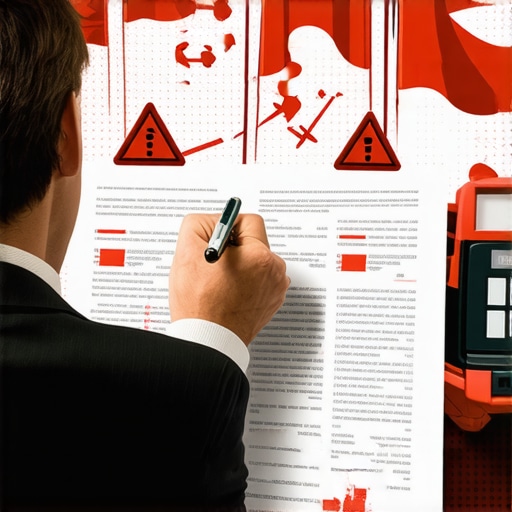
Welcome to the Audit Trap: What Your Tax Returns Might Be Saying About You
Let’s cut through the nonsense. You might think that as long as you file on time and with a few deductions, you’re safe. Think again. The IRS isn’t just crunching numbers; it’s hunting for red flags, signals that scream: “Investigate me!”. And make no mistake—if you trigger these, an audit isn’t a matter of if, but when.
In this piece, I’ll expose the three sneakiest tax red flags that exponentially increase your chances of getting called in for scrutiny. These aren’t just small mistakes; they’re megaphones announcing, “Look over here!” to the IRS agents. If you’re serious about protecting your business—and your wallet—you need to understand what sets off these alarms.
Think of the tax audit like a game of chess—every move you make is being watched, analyzed, and remembered. Make a wrong move, and it’s checkmate. So, why are we still ignoring these flags? Because for years, many have fallen into the trap of thinking that the IRS is only after the obvious culprits, the large corporations, or the blatant fraudsters. Newsflash: the IRS is circling the small businesses and sole proprietors just like you—especially if you’re unwittingly triggering these signs.
Why This Fails: The Myth of Innocent Mistakes
Many believe that small errors or unusual deductions go unnoticed. That’s a false sense of security. The IRS’s data analytics are sharper than ever, and their focus has shifted towards patterns, anomalies, and inconsistencies. Did you know that certain red flags, if present in your return, can automatically trigger a detailed review? That’s right—no human need be involved immediately. Your underreported income, suspicious expenses, or unusual deductions act like neon signs flashing in their algorithms.
For instance, claiming a high number of home office deductions without proper documentation can set off alarm bells. The IRS’s recent crackdown on soft deductions is no joke—your claim might be reviewed, questioned, or worse, flagged for audit. To understand more about how these red flags work, check out this article on red flags.
The Market is Lying to You
The biggest lie in the tax world is that meticulous record-keeping is enough to keep the IRS at bay. It’s not. The system is designed to flag anomalies, not just outright fraud. If your expenses look “too good to be true,” they probably are. If your income and deductions don’t match the industry average or your previous years, it’s a signal—silver platter included.
Think of the IRS as a detective on a sinking ship, scanning the murky waters for deviations from the norm. Your job isn’t just to float above water but to ensure your vessel isn’t spotted as a target. Remember, even small inconsistencies, like unexplained large deposits or frequent cash transactions, are signals the IRS is watching. This isn’t paranoia; it’s their protocol. And it’s precisely why understanding these red flags could save your business from a nightmare.
For more on how to avoid common pitfalls, consider reviewing this guide on balance sheet discrepancies.
The Evidence That Speaks Louder Than Words
Historical patterns reveal that the IRS isn’t waving a white flag; they’re storming the gates with algorithms designed to catch anomalies. Remember the 1980s crackdown on unreported income? It wasn’t happenstance—those investigations were rooted in systemic red flags: large cash deposits, inconsistent income reports, and suspicious expenses. Fast forward to today, and that same playbook is being executed with even greater precision. The IRS’s data analytics systems analyze millions of returns annually, hunting for patterns that deviate from industry norms or personal history. If your return shows high expenses on software, equipment, or travel, but lacks supporting documentation, the system flags you—not just once, but repeatedly. This isn’t coincidence; it’s probability in action. The more red flags, the higher the likelihood of a detailed review, often spiraling into an audit. This pattern isn’t accidental; it’s the system’s built-in weapon to root out inconsistencies that could indicate underreported income or inflated deductions.
The Root Cause of IRS Suspicion: Systematic Pattern Recognition
The problem isn’t simply that errors exist; it’s that the current IRS system is designed to be hyper-aware of these errors—especially when those errors form *patterns*. Small misreportings or overzealous deductions aren’t just mistakes; they’re signals, deliberately or not, that something’s amiss. Why do some taxpayers continually trigger these flags? Because they treat the tax code as a free-for-all, thinking that partial documentation and haphazard claims are enough to slip past scrutiny. They’re mistaken. These flags are the result of a deliberate shift towards pattern recognition—detecting deviations, not just outright fraud. For example, inflating expenses on personal trips as business deductions might seem innocent, but when multiple returns show this same anomaly, it becomes a pattern, a code that signals, “Look here.” Once such a pattern is established, the chances of IRS intervention escalate markedly.
The Follow the Money Principle: Who Benefits From the System’s Flaws
Now, consider who benefits when small-scale taxpayers unknowingly trigger red flags. It’s not just the IRS, but a system that increasingly relies on automated data analysis—an ecosystem that feeds on *compliant* taxpayers. these red flags act as a chisel, carving out revenue from those who unknowingly cross the line. It’s essential to see that the IRS system favors those who stay within its predefined parameters: accurate reporting, proper documentation, transparency. Those who skirt the line, whether intentionally or not, become targets—victims of a machine designed to flag deviations. The disproportionate impact on small businesses and sole proprietors—those who often lack resources for professional accounting—reveals a systemic bias. They’re the ones least equipped to navigate the labyrinthine rules, and thus, more likely to fall prey to these red flags. The more someone tries to bend rules, the more the system’s gears turn against them, benefitting the very machinery that keeps tax revenues flowing, regardless of intent or fairness.
The Trap of Oversimplification
It’s easy to see why people think that as long as they keep meticulous records and avoid outright fraud, they’re off the hook. The common wisdom suggests that honest taxpayers can breathe easy if they play by the rules. Critics argue that the red flags we discussed earlier are just alarmist exaggerations or rare exceptions, not systemic issues. They claim that most audits are triggered by genuine errors or random selection, not intentional flagging.
The Flawed Focus on Innocent Mistakes
I used to believe this too, until I realized that this perspective ignores the role of pattern recognition in the current tax enforcement landscape. The truth is, the IRS has shifted from a reactive to a proactive approach—using algorithms designed to detect patterns of suspicious behavior rather than merely flagging blatant fraud. So, while an innocent mistake might trigger a review, it’s the pattern of errors—the consistent misreporting or recurring suspicious deductions—that truly triggers the machine’s attention. This focus on patterns makes even well-intentioned taxpayers vulnerable if they unknowingly repeat certain behaviors.
It’s not just about a single error; it’s about a series of signals that, over time, paint a picture of potential underreporting or abuse. The IRS’s data analytics can now identify these patterns with remarkable accuracy, much like a detective recognizing traits of a criminal based on repeated behaviors. Dismissing red flags as mere errors underestimates the system’s capacity to sift through millions of returns and identify subtle deviations indicating deeper issues.
The Elephant in the Room: Automation and Bias
Many argue that automation removes human bias, making the process fair and objective. They believe that these algorithms are purely data-driven, and therefore, justly highlight genuine issues. The critique here is that automation is a double-edged sword; it amplifies existing biases and often penalizes those less equipped to navigate complex tax law.
But that’s a shortsighted view that ignores systemic flaws. The machines are only as good as the data fed into them—and that data can be biased or incomplete. For small business owners and individual taxpayers, relying solely on automated red flags means vulnerability to false positives, misinterpretations, and oversights that disproportionately impact those with less resources and expertise. The automated system’s focus on pattern detection can sometimes conflate legitimate practices with red flags, leading to unjust scrutiny and unnecessary audits.
In essence, the problem isn’t automation itself but the uncritical reliance on algorithms without sufficient human oversight, transparency, or context. As a result, honest taxpayers who momentarily stray from the ‘average’ in their deductions or reporting can become targets, regardless of their intent or documentation. This systemic issue underscores why red flags should be viewed not as conspiracy or overreach, but as part of an imperfect machinery that needs continual refinement.
The True Power of Pattern Recognition
Understanding this is crucial: the red flags are less about individual mistakes and more about how those mistakes fit into broader patterns. The focus on pattern recognition, while efficient for the IRS, risks penalizing legitimate taxpayers in a way that feels unjust. It’s not merely about catching fraud; it’s about profiling behaviors that deviate just enough to attract suspicion. Recognizing this helps taxpayers understand that even honest errors, when repeated or coupled with other suspicious activities, can trigger serious consequences.
The Point of No Return
Ignoring the warning signs of IRS red flags is like walking blindfolded into a minefield. The longer you delay addressing these issues, the more explosive the consequences become. Right now, every overlooked detail, every misstep, increases your vulnerability to audits, penalties, and even criminal scrutiny. The IRS’s automation tools and pattern recognition systems mean that in today’s climate, ignorance is not bliss—it’s a ticket to financial ruin. Just as a small crack in a dam worsens with time, neglecting these red flags can lead to an irreversible flood of legal and financial repercussions.
What are we waiting for
If you continue to dismiss these warnings, you risk turning a minor oversight into a full-blown crisis. Future audits will become more frequent and more severe, with the IRS deploying even more sophisticated algorithms designed to sniff out deviations. The moment you ignore these signals, you set in motion a chain reaction—initial questioning leading to deeper investigation, followed by penalties, interest, and mounting legal costs. It’s not just about fines; it’s about losing your reputation, your business, and possibly your freedom.
The Slippery Slope of Inaction
Consider this: each neglected red flag is like a small snowball at the top of a hill. Left unchecked, it will grow exponentially as it rolls downward, gathering more snow—more errors, more discrepancies, more suspicion. Before you know it, that tiny mistake morphs into a massive avalanche from which recovery is nearly impossible. Once the IRS’s machine detects these patterns—especially patterns of concealment or deception—the door to an audit swings wide open. The cost of this inaction isn’t just immediate financial penalties; it’s the destruction of your credibility and peace of mind.
Is it too late
Many believe they still have time, that if they hide their mistakes, they can avoid detection. But the truth is, the longer you wait, the deeper the damage. The IRS’s data systems are becoming more intelligent, personalized, and relentless. Holding onto omissions or inaccuracies now will only make them harder to correct later. It’s akin to procrastinating on a health issue—what starts as a small problem becomes a catastrophic emergency. The window for proactive correction is shrinking, and with each passing day, the price for neglect rises.
A Wasted Opportunity
Failing to act today not only jeopardizes your present finances but also squanders the chance to steer your future in a smarter direction. Addressing red flags head-on means transforming your tax practices from risky gambles into secure strategies. It’s about safeguarding your assets, reputation, and peace of mind. Ignoring these signs diminishes your ability to plan for growth, invest confidently, and build a legacy. Every moment you neglect this responsibility is a missed opportunity—an opportunity to establish transparency, compliance, and trust.
Step Up or Stay Out of the Fire
There’s no gray area left in this game; either you understand the red flags that spell trouble or you become another statistic in the IRS’s relentless hunt for discrepancies. Playing it safe by ignorance isn’t just naive—it’s a path straight to audit hell. The system is sharper than ever, armed with algorithms trained to sniff out deviations, patterns, and anomalies that even seasoned CPAs might overlook. Reading this, your move is crystal clear: educate yourself, tighten your books, and leave no room for doubt.
The twist here is that red flags are less about individual mistakes and more about how those mistakes weave into patterns. Every unexplained deposit, every questionable deduction, and every inconsistent report feeds into a broader narrative the IRS is eager to read. Your job isn’t merely to avoid errors but to ensure your financial story remains authentic and transparent. The silent killer is in the repetition—habitual misreporting or careless inaccuracies that become the ‘signature’ the IRS’s algorithms detect.
Don’t let your business become another casualty of a system that favors the compliant and penalizes the complacent. **Address the red flags before they turn into a full-blown crisis**. Dive into your financials regularly, challenge your assumptions, and seek clarity where confusion reigns — stop letting unapplied cash payments mess up your balance sheet. Remember, every neglected detail is an invitation for the IRS to scrutinize and potentially devastate your enterprise.
The final verdict is stark: stay vigilant, keep impeccable records, and align your reports with reality. The last thing you want is for pattern recognition to turn into pattern prosecution. Your business’s future depends on your willingness to face these red flags head-on. The question isn’t if you’ll be audited—it’s when, unless you act now.
The system’s no longer a fair game; it’s a war zone. So, what are you waiting for? The time to defend your integrity is now. Turn your bookkeeping from a source of anxiety into your strongest shield. Remember, the IRS’s algorithms are constantly evolving, but so should your strategy. The game favors those who anticipate, adapt, and act.
Make the choice that will define your legacy—transparency, compliance, and readiness. Because in this fight, the only real winners are those who see the red flags—and crush them before they destroy everything.
Let this be your call to arms: don’t wait until it’s too late. Your future self will thank you for the courage you show today. And if you’re serious about staying ahead of the game, explore more at `https://acurateaccounting.com/how-to-spot-fraudulent-charges-in-your-quickbooks-feed-before-its-too-late` — knowledge is your best defense against the audit trap.