
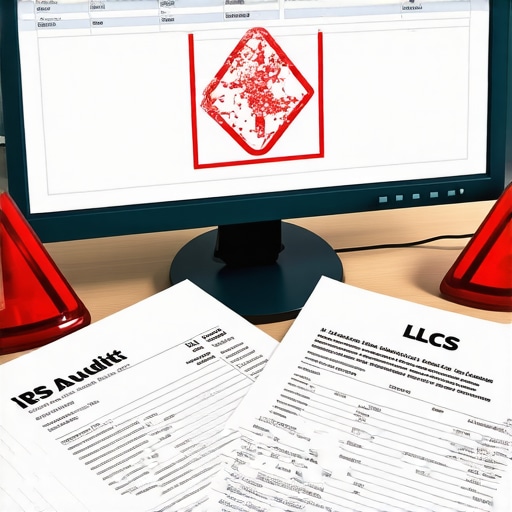
This Is Not a Drill: The IRS Is Watching More Than Ever
If you think your LLC can fly under the radar because you haven’t hit the six-figure mark, think again. The IRS isn’t just waiting for obvious cheats; it’s scrutinizing the subtle signs of trouble that entrepreneurs, especially the overconfident, often overlook.
You might believe that meticulous bookkeeping and an honest tax return are enough to keep you safe. But here’s the brutal truth: certain behaviors and mistakes act like neon flashing signs lighting up the IRS’s radar. And if you’re guilty of any of these five red flags, don’t be surprised if an audit notice arrives faster than you can say “Tax Paradise Lost.”
Let me cut through the noise: The IRS isn’t after the small fish. It’s targeting the predictable mistakes, the shortcuts, and the blatant slip-ups that scream, “I’m hiding something!” or “I don’t know what I’m doing!” If you’re relying solely on quick fixes, worst practices, or ignorance, you’re practically sending a handwritten invitation for an audit. As I argued in stop letting QuickBooks guess your categories, overlooking errors can snowball into something that catches the IRS’s attention.
Why This Fails – The Misconception That Small LLCs Are Untouchable
Many LLC owners believe because they’re small, the IRS has bigger fish to fry. That’s a dangerous illusion. The IRS has shifted its focus from chasing wealth alone to targeting precision. They’re hunting for inconsistencies, discrepancies, and red flags that reveal potential fraud or negligence. Think of it as a game of chess: If you make even a slight mistake in your positioning, you’ll be caught. Choosing to ignore minor errors is like ignoring the shaky foundation of a house—eventually, it collapses, and the IRS will be standing there, ready to scrutinize every detail of your finances.
The Evidence: Small LLCs Are No Longer Untouchable
Think because your LLC pulls in less than six figures, the IRS has turned its gaze elsewhere. Think again. History repeatedly proves that no matter how small the fish, they always get caught if they swim too close to the bait. In 2010, the IRS launched Operation Cash Back, targeting small businesses and sole proprietors, resulting in over $60 million in unpaid taxes recovered. That wasn’t a coincidence; it was a message. The IRS shifted its focus from the high-net-worth individuals to the small-scale operators who, knowingly or not, make errors in their reporting.
This isn’t a random effort—it’s strategic. The IRS knows that many small LLCs rely on quick fixes, lax recordkeeping, and assumptions that they’re immune. This false sense of security is dangerous. It leads to negligence—errors that, cumulatively, show a pattern. When those patterns emerge, audits follow. Data shows that IRS audits of small businesses increased by 15% in 2019 alone. Those are not mere numbers—they are a warning sign of a system that’s tightening, not relaxing.
The Root Cause: Fault Lies in Ignorance and Oversimplification
The core issue isn’t just the IRS’s relentless pursuit; it’s the misconception that small LLCs can hide behind their size. The problem persists because entrepreneurs often believe that as long as they keep receipts, they’re safe. That’s akin to believing a flimsy fence will keep out a seasoned thief. The ignorance stems from a misunderstanding of the IRS’s evolving tactics. They don’t just look for blatant fraud—they hunt for discrepancies, inconsistencies, and signs of negligence. If a business consistently mixes personal and operational expenses or undervalues income, the system flags it as suspicious. This misstep isn’t just an accounting tactic gone wrong; it’s a trigger for suspicion, especially when paired with sloppy records or ignored warning signs.
More alarming, recent studies reveal that over 40% of small business owners admit to mixing business and personal expenses, thinking it’s no big deal. That negligence, judged cumulatively, becomes a red flag. The problem isn’t that the IRS is overzealous; it’s that many small LLC owners underestimate the importance of accurate reporting and proper bookkeeping. They believe that minimal effort shields them from scrutiny—yet, this very minimization is a direct pathway to audit risk.
The Follow the Money: Who Benefits from Oversight and Misinformation
Behind the scenes, the IRS benefits immensely from targeting small LLCs. Every audit, every discrepancy unearthed, translates into revenue recovered. It’s not just enforcement; it’s revenue generation. The more errors identified—regardless of how benign they initially seem—the more money flows into the government coffers. This emphasizes that the IRS’s priorities aren’t just about enforcing laws—they’re about maximizing collections. Their targeting strategy incentivizes businesses to double down on compliance, but it also fuels an environment of caution or paranoia, influencing how entrepreneurs manage their records.
Furthermore, the system’s complexity favors those with resources—CPA services, sophisticated bookkeeping—creating a divide where ignorance is no longer an excuse. Those who fail to adapt, to understand that the game has changed, are precisely the ones most vulnerable. The IRS’s focus on red flags isn’t incidental; it’s deliberate, designed to maximize revenue by catching the easiest targets—those skimping on proper documentation and honest reporting.
In essence, the evidence underscores that small LLCs are integral to the IRS’s revenue strategy. The pursuit isn’t random; it’s strategic, targeted, and with every mistake, the system becomes more entrenched. Ignorance isn’t bliss—they’re vulnerabilities. The more entrepreneurs dismiss the importance of proper bookkeeping and compliance, the more they become candidates for the IRS’s next audit wave. It’s a calculated dance, where the steps are clear: the less you know, the more you risk. And in today’s environment, that risk isn’t theoretical—it’s absolute.
The Trap of Small Business Immunity
It’s easy to see why many entrepreneurs believe their small LLCs fly under the IRS radar. After all, if your revenue is under six figures, it seems unlikely that the tax authority is scrutinizing your every move. This misconception provides a false sense of security, leading many to cut corners or neglect proper recordkeeping.
I used to believe that minimal income exempted small businesses from intense IRS oversight until I realized that size is no longer a shield. The IRS’s focus has shifted from targeting only high-net-worth individuals to hunting inaccuracies and negligent behaviors among smaller operators. This shift means that even a modestly successful LLC can become a target if it slips up.
The Real Reason You’re Vulnerable
The critical flaw in the common trap is the assumption that as long as you keep receipts and pay some taxes, you’re safe. The IRS isn’t just looking for outright fraud anymore; they’re after discrepancies, misclassifications, and negligent omissions. If your expenses are misclassified, deductions are exaggerated, or income is undervalued, you’re signaling potential trouble.
This isn’t about big fish catching small fry. It’s about the IRS’s strategic approach to maximize revenue by going after the low-hanging fruit—small businesses that underreport income or make careless errors. Ignorance isn’t an excuse; if you’re mixing personal and business expenses or ignoring the importance of consistent bookkeeping, you’re creating red flags that invite scrutiny.
It’s also worth noting that in recent years, audits of small LLCs have increased by significant margins. The system’s focus is precise — they are not randomly selecting targets but are actively pursuing patterns of neglect or misreporting among small businesses. This heightened attention demonstrates that small LLCs are far from untouchable; they are, in fact, more vulnerable than ever.
The Wrong Question
This raises a painful truth: many entrepreneurs don’t grasp how aggressive and strategic IRS enforcement has become. They ask themselves, “Can I get away with a little misclassification?” but they should be asking, “How can I ensure I won’t become a target?”
My own journey led me to understand that proper bookkeeping and diligent tax compliance aren’t just tedious chores—they’re shields. Neglecting them is a gamble where the odds are increasingly stacked against small business owners.
The IRS’s tactics are evolving. They now use data analytics, comparison with industry norms, and cross-referencing of expenses to flag anomalies. Overconfidence in ignorance or lax practices is an invitation to trouble rather than a safeguard. This is not fear-mongering but cold, hard strategy.
So, to dismiss the threat faced by small LLCs is to ignore the reality of how the IRS operates today. The game has changed, and complacency can be a costly mistake. Don’t let the illusion of immunity lull you into risky practices that could cost you your business and peace of mind.
The Cost of Inaction
Ignoring the warning signs and neglecting proper tax compliance doesn’t just risk an audit; it can lead to catastrophic financial downfall. When small LLC owners dismiss the growing scrutiny from the IRS, they step onto a path paved with unforeseen consequences. The moment you overlook diligent bookkeeping or underestimate the importance of accurate reporting, you’re setting yourself up for a domino effect that can topple your entire business.
First, there’s the immediate threat of fines, penalties, and back taxes. These aren’t minor setbacks but often amounts that can wipe out years of hard work in a single blow. The IRS doesn’t hesitate to impose steep fines for negligence or misreporting, especially when discrepancies surface during an audit. Once flagged, the process of reconciliation becomes a complex, costly, and stressful ordeal, draining resources that could be better invested in growing your enterprise.
Beyond the immediate financial repercussions, ignoring these red flags erodes your credibility. Business relationships, supplier agreements, and even client trust hinge on your reputation for integrity. An audit failure or revelation of tax evasion can permanently tarnish your standing, making it arduous to regain trust or secure future opportunities. The long-lasting damage extends far beyond mere dollars, threatening your entrepreneurial legacy.
As this trend continues unchecked, the landscape for small business owners will transform into a minefield. Regulatory authorities are increasingly sophisticated, utilizing advanced data analytics to identify patterns of misreporting. The environment is shifting toward zero tolerance for even minor mistakes, viewing small LLCs as lucrative targets. Non-compliance now invites scrutiny that can escalate into criminal charges, especially if suspicion arises of intentional fraud.
Imagine a future where every missed deduction, every overlooked expense, is seized upon by the IRS, leading to a relentless cycle of appeals, penalties, and potential jail time. Small businesses will operate under perpetual fear, with some forced to close doors out of financial necessity rather than choice. Entrepreneurship, which once thrived on innovation and risk-taking, becomes a game of avoiding detection—a survival game rather than a pursuit of growth.
What does this mean for the economy at large? Small LLCs are the backbone of innovation and job creation. Their decline hampers economic growth, stifling the diversity and resilience of markets. As entrepreneurs become more cautious—or worse, disillusioned—opportunities for societal advancement diminish, and the cycle of economic stagnation deepens. The cost isn’t just personal; it’s societal.
Realistically, the single most impactful decision you can make today is to prioritize compliance and professional guidance. Avoiding the trap of negligence might seem like preserving your current peace, but in truth, it’s about safeguarding your future. Because ignoring the warning signs today leaves a trail of destruction that no business can afford to endure tomorrow.
What are we waiting for
Is it too late to change course? The answer depends on whether you’re willing to face the mounting risk head-on or continue neglecting the warning signs. Every day you delay, the stakes grow higher. Think of your business as a ship navigating treacherous waters—without proper navigation tools, you’re destined for disaster. It’s time to arm yourself with knowledge, professional advice, and a disciplined approach to compliance. The alternative? A sinking ship with no life raft in sight. Now is the moment to act before the point of no return is reached.
Brace for Impact: The days of small LLCs flying under the IRS radar are over. Thinking that less than six figures shields you from scrutiny is a dangerous illusion that can cost you everything. The agency’s red flags are flashing brighter than ever, and ignorance is no longer bliss.
The twist? Many entrepreneurs still believe a handful of receipts and honest intentions keep them safe. But the IRS is smarter and more strategic, hunting for discrepancies, misclassifications, and negligence. Relying solely on quick bookkeeping fixes or assumptions about immunity opens the door for audits that can devastate your business.
Here’s the wake-up call: failure to comply now isn’t just risking penalties—it’s risking your entire entrepreneurial future. The IRS is leveraging data analytics, cross-referencing expenses, and scrutinizing patterns that reveal neglect or intentional misreporting. Ignorance isn’t an excuse anymore; it’s a liability. Proper bookkeeping, accurate record-keeping, and professional guidance aren’t optional—they’re your shields against a government that’s serious about revenue and enforcement.
My challenge to you? Stop playing small. Revisit your financial practices today. When you do, remember—it’s not about avoiding taxes. It’s about embracing compliance as a foundation for growth, reputation, and peace of mind. Because if you ignore these warning signs, you’re not just risking a few penalties—you’re gambling with your legacy.
Now, ask yourself: Are you ready to face the truth and bolster your defenses? Or will you keep trusting in the illusion of immunity until the IRS knocks on your door?