
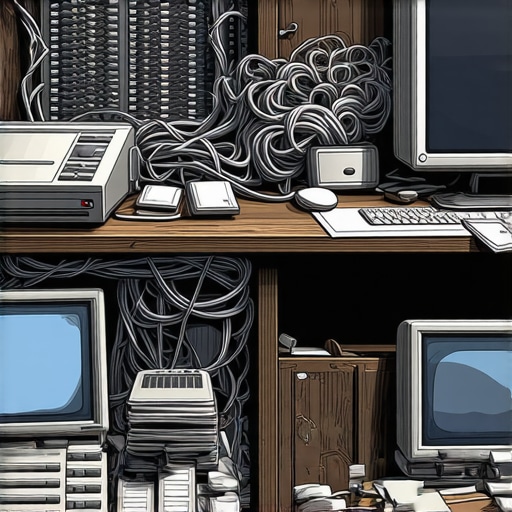
Is Your Accounting System Holding Your Business Back?
You might think that as long as your books are balanced and tax filings are on time, you’re on the right track. But here’s the truth: your current accounting setup could be a silent assassin, choking off your growth before you even realize it. The myth that good enough is good enough is costing you more than you imagine.
I argue that reliance on outdated spreadsheets, clunky QuickBooks configurations, or a haphazard approach to CPA services can turn your financial system into a bottleneck. This is not about fancy software or flashy dashboards; it’s about how your setup hampers your ability to see real-time insights, make informed decisions, and scale confidently. If your numbers are a lagging indicator rather than a real-time signal, you’re flying blind.
In today’s hyper-competitive market, businesses can’t afford to operate with a financial system that functions like a sinking ship, slowly bleeding cash and obscuring errors until it’s too late. Think of your accounting setup as the foundation of a skyscraper: if it’s cracked or unstable, everything above teeters. Still relying on manual bookkeeping, inconsistent data entry, or a scattershot mix of CPA providers? That’s a recipe for disaster.
It’s time to challenge the status quo. Stop believing that patching your Excel sheets or trusting your outdated QuickBooks file will sustain you long-term. As I’ve emphasized in my guide on QuickBooks mastery, a robust, clean, and integrated accounting system doesn’t just facilitate compliance; it fuels growth. The goal isn’t to merely track expenses but to harness your financial data as a strategic weapon.
The harsh reality is that an inefficient setup whispers doubts about your scalability. It robs you of agility, misleads your cash flow analysis, and delays crucial decision-making. Like a game of chess, ignoring the structural weaknesses in your accounting system almost guarantees a checkmate in your growth ambitions.
This isn’t an overstatement. If you want to grow, you need a system that scales with you—one that provides clarity, accuracy, and foresight. Otherwise, you’re simply rearranging deck chairs on a sinking Titanic.
The Market is Lying to You
Far too many entrepreneurs buy into the myth that waiting until year-end or relying on a CPA’s quarterly review is enough. Wrong. Your business demands real-time financial intelligence. Think of your current setup as a faulty compass—it might point somewhere, but it certainly won’t take you where you want to go. Instead, it’s leading you into dangerous waters where mistakes, omissions, and missed opportunities lurk around every corner.
In my experience, business owners are blindsided because they underestimate how much a flawed accounting process costs them—monthly missed deductions, incorrect tax estimations, or cash flow mismanagement. As I argued in my article on trusted CPA techniques, the right tech and processes can turn your books from a necessary evil into a strategic advantage. But first, you must recognize that your current setup isn’t enough.
The Evidence of Outdated Systems
Consider the case of a mid-sized manufacturing firm that relied solely on manual bookkeeping and outdated QuickBooks configurations. Over a year, their cash flow analysis lagged by weeks, leading to missed opportunities and late tax adjustments. When they finally upgraded to an integrated, real-time accounting solution, they discovered errors totaling over $250,000—errors that had been hidden due to poor data synchronization and delayed reporting.
A Broken System and Its Consequences
This isn’t an isolated incident. The root cause often isn’t a lack of effort but a flawed infrastructure. Spreadsheets full of manual entries are susceptible to human error—transposing digits, missing entries, inconsistent data formats. QuickBooks, if not meticulously maintained, becomes a shadow of its potential—becoming increasingly slow, unreliable, and disconnected from other critical business systems. The result? Financial insights that are outdated, inaccurate, and, worse, misleading.
Follow the Money: Who Benefits from Maintaining the Status Quo?
It’s revealing to examine *who* profits from sticking with these inefficient setups. Larger CPA firms may prefer clients to rely on their manual processes, which justify ongoing billable hours. Software vendors might not push for automation that cuts down their revenue streams. Meanwhile, business owners are left in the dark—failing to harness their real-time data, making uninformed decisions, and ultimately losing profits.
This pattern echoes historical parallels from the early days of the banking industry, where opaque ledgers and manual record-keeping fostered corruption. As technology advanced, those resisting change faced collapse. Today, the same applies — a sluggish, error-prone accounting system is a ticking time bomb. The evidence shows that systems not aligned with automation and integration become costly liabilities rather than assets.
The Cost of Inefficiency
The painful truth is, a discrepancy of just 5% in your cash flow forecasting can mean the difference between profit and loss. Combine that with missed tax deductions from delayed or inaccurate entries, and the financial impact compounds exponentially. A 2019 survey revealed that small businesses experience an average monthly cash flow misstatement of 8%, translating into tangible losses over the fiscal year. That isn’t a small discrepancy; it’s a leak in the financial pipeline, widening with each passing month.
How Systems Sabotage Growth
When your accounting software serves as a bottleneck, it inhibits agility. Decision-making becomes a game of guesswork, based on stale figures that no longer reflect reality. If your CPA services operate on a quarterly basis, the gap between actions and insights widens dangerously—making it impossible to respond swiftly to market shifts or internal issues.
The evidence underscores that a fragmented or manual system is not just inefficient—it’s actively damaging. In 2008, Lehman Brothers’ use of layers of opaque spreadsheets contributed to their downfall. Their failure to maintain transparent, real-time data was disastrous, revealing that flawed systems can lead to catastrophic outcomes—if not corrected before the cracks deepen.
The Trap of Simplistic Solutions
It’s easy to see why many entrepreneurs cling to the idea that basic bookkeeping or relying on intuitive familiarity with QuickBooks suffices for their financial health. The narrative is compelling: as long as the books are balanced and deductions are claimed, the system is working. But this perspective is dangerously shortsighted.
I used to believe this too, until I saw firsthand how superficial approaches masquerade as security while quietly stunting growth. The argument for sticking with familiar, manual, or semi-automated systems often hinges on cost savings and simplicity. Yet, this overlooks the profound costs of inaccuracies, delayed insights, and missed strategic opportunities.
The Flawed Notion of “Enough”
Many business owners operate under the misconception that their existing system is adequate as long as it covers compliance requirements. They view automation and integration as luxuries, not necessities. This mindset ignores the evolving complexity of business operations and the increasing demand for real-time financial intelligence.
In truth, sticking to outdated methods creates a fragile veneer of control that can crumble at any moment. The real question isn’t whether your current setup is perfect — it’s whether it enables you to respond swiftly, analyze accurately, and plan proactively. The superficial comfort of “good enough” is a trap that leads directly to strategic stagnation.
${PostImagePlaceholdersEnum.ImagePlaceholderC}
Don’t Be Fooled by Perceived Cost Savings
It’s understandable that investing in advanced systems or engaging dedicated CPA services appears costly upfront. The prevalent view is: why pay more when the existing system ‘works’? This thinking ignores the enormous opportunity costs associated with errors, inefficiencies, and delayed reporting — costs that gradually erode margins and impair decision-making.
Investing in a comprehensive, integrated accounting infrastructure is, in reality, an investment in the company’s agility and resilience. It’s about transforming your financial data from a static record into a live strategic asset. The savings realized from improved accuracy, faster tax filings, and informed decision-making vastly outweigh initial expenses.
Critical Challenge to Assumptions
Are you truly prepared for unexpected audits, market shifts, or rapid growth? The complacency of “it’s good enough” blinds many to looming vulnerabilities. An outdated system might seem sufficient now, but it becomes a ticking time bomb as operations scale.
This is the uncomfortable truth that the naive overlook. The real issue isn’t whether your current setup is technically compliant; it’s whether it accelerates or hampers your ability to adapt and thrive in an increasingly complex financial landscape.
The Cost of Inaction
Failing to upgrade your outdated bookkeeping and QuickBooks configurations sets your business on a perilous path. As errors accumulate and automation diminishes, the financial data you rely on becomes increasingly unreliable. This chaos doesn’t just risk minor discrepancies; it threatens the very survival of your enterprise. In five years, businesses that ignore this warning could face catastrophic failures—missed growth opportunities, audit nightmares, and irreversible damage to their reputation.
The domino effect begins with overlooked errors in your financial records. These small missteps snowball into significant misstatements, leading to misguided decisions and misallocated resources. Over time, cash flow mismanagement becomes commonplace as manual processes falter under pressure, and the inability to generate real-time insights leaves leaders blind to imminent threats.
A Choice to Make
Choosing to dismiss the urgency of modernizing your accounting infrastructure is akin to sailing a vessel with a cracked hull amidst a storm. The longer you delay repairs, the greater the risk of sinking. The world is accelerating; competitors leveraging real-time data and automation will outpace and outmaneuver those stuck in the past. If this trend persists, in five years, your business could be a shadow of its former self—relevant only as a cautionary tale.
Think of your current setup as a landline in the age of 5G. The gap between outdated systems and the digital demands of tomorrow widens daily. Without action, you’ll find yourself trapped in a cycle of firefighting, constantly patching leaks instead of fortifying your foundation for future growth.
What are we waiting for?
Delaying this transition is a reckless gamble—one with high stakes and potentially devastating outcomes. The opportunity cost of sticking to manual entries, scattered CPA services, and sluggish reporting is staggering. Your competitors are harnessing integrated, real-time financial tools that grant them agility and sharper decision-making. Meanwhile, your business risks becoming obsolete, left behind in the dust of innovation.
It’s essential to recognize that the longer you ignore system flaws, the harder and more expensive the overhaul becomes. Waiting too long transforms what could be a manageable upgrade into a costly, disruptive upheaval that could have been avoided. Your choice now is simple: act and modernize or succumb to the relentless tide of failure.
Metaphor: The Ticking Financial Time Bomb
Imagine your business as a ticking time bomb, with every manual entry, outdated QuickBooks file, and scattered CPA—each representing a slow-burning fuse. Ignoring the warning signs means watching that fuse shorten continuously, bringing the explosion of financial chaos closer with each passing day. Only by acting decisively can you defuse this bomb, securing your future from the devastation of systemic failure.
We’ve reached the turning point in the evolution of financial management for small businesses. The steadfast reliance on manual bookkeeping, outdated QuickBooks setups, and unintegrated CPA services has transformed from a manageable inconvenience into a ticking time bomb threatening your entire future. Now is the moment to confront this strategic failure head-on.
Hidden beneath the surface are errors, inefficiencies, and missed opportunities that quietly drain your resources. Your current setup doesn’t just hinder growth—it sabotages your very ability to make timely, informed decisions. The myth that short-term fixes—patching Excel sheets or relying on quarterly CPA reviews—are enough, is costing you dearly and dangerously.
Imagine the power of a robust, real-time accounting system—one that scales effortlessly, offers transparent insights, and integrates seamlessly with your operations. This isn’t a pipe dream; it’s a necessity for the business that refuses to be left behind. As I’ve shown in my guide on QuickBooks mastery, transformation begins with recognizing that your current infrastructure limits your potential, not your effort.
But perhaps the most sobering reality is this: the longer you ignore the flaws, the deeper the cracks become, and the more catastrophic the fallout. Errors hidden within manual entries and mismatched data points compound into systemic chaos. The risk isn’t just financial inaccuracies; it’s the collapse of your strategic position.
Your Move is clear. Embrace automation, integrate your systems, and leverage real-time data to propel your business forward. The alternative is a slow bleed leading to irrelevance, obscurity, and eventual failure. The choice is in your hands—will you act now or watch your enterprise become a cautionary tale?
Remember, systems are only as strong as the mindset behind them. Don’t let outdated bookkeeping be the legacy you leave behind. The future belongs to those who recognize the signs of systemic failure and have the courage to overhaul them before it’s too late.
For more insights on safeguarding your financial health and transforming your approach, explore our mission or reach out via contact page. Your business deserves a system that works as hard as you do. Make the change today—your legacy depends on it.