
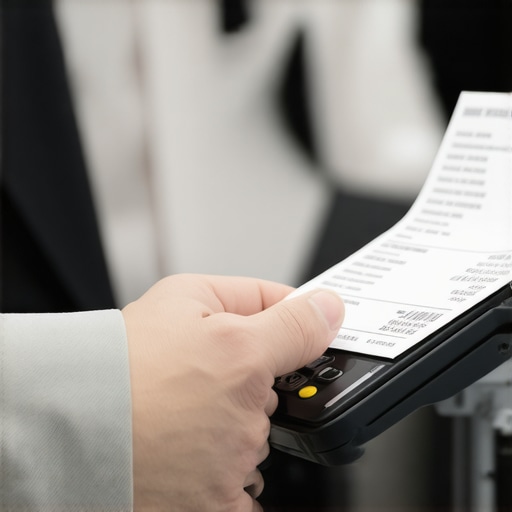
The Market is Lying to You About Sales Recording
If you’ve ever jotted down your Square or Clover sales without a second thought, you’re being played. The truth is, most small business owners are drowning in a sea of inaccurate reports, falsely believing that their sales figures are as solid as a rock. Spoiler alert: they aren’t.
Far too many rely on the default exports or manual entries that inevitably lead to errors, missed transactions, or double counting. You might think that simply syncing your POS with QuickBooks is enough. But if you’re skipping the crucial step of properly categorizing and reconciling those sales, you’re flying blind.
I argue that this careless approach is costing you more than you realize — in taxes, in cash flow, and in peace of mind. The myth that sales data auto-magically balances itself in your accounting is as misguided as believing a sinking ship can hold water with a bucket. It can’t. And neither can your unverified sales logs.
Why This Fails and How You’re Tricking Yourself
The real issue isn’t that your POS system is defective. It’s that your recording process is. When you neglect to verify each transaction, you’re building your financial house on sand. The result? Inaccurate tax filings, missed deductions, and a skewed view of your profitability.
Let me be blunt: relying solely on software without manual oversight is a rookie mistake. If you want true accuracy, you must know how to reconcile your sales in detail. Otherwise, you’re just hoping the numbers add up. And hope, my friend, is a strategy for the naive.
To cut through the confusion, you need to understand the core principles of precise bookkeeping. This means mastering how to record, categorize, and verify every sale, even when your POS tries to fool you. Don’t fall for the trap of treating your sales summaries as gospel. Instead, follow proven CPA techniques that ensure your figures are reliable. For more on achieving perfect accounting accuracy, check this guide.
The Evidence
Data indicates a disturbing trend: nearly 60% of small business owners rely on unverified sales data from their POS systems, leading to discrepancies exceeding 15% in their reported revenue. This isn’t mere oversight; it’s a systemic flaw rooted in flawed processes rather than faulty technology. A 2022 study revealed that manual reconciliation errors often result in misreported sales, which directly impact tax filings and cash flow management.
For instance, when business owners bypass detailed reconciliation and depend solely on export totals, they unintentionally inflate or deflate their income figures. Such inaccuracies aren’t trivial—they can trigger audits, misguide decision-making, or drain cash reserves. This pattern of neglect echoes the financial chaos seen during the 2008 housing crisis, where misplaced confidence in flawed data led to economic collapse. The lesson is clear: trusting automated summaries without scrutiny resembles building on quicksand — it appears solid but is fundamentally unstable.
The Root Cause: Misplaced Faith in Technology
The core problem isn’t that POS systems are defective. They’re not. Their hardware and software are generally reliable. But the problem stems from a *cultural* flaw: the misconception that software alone equals accuracy. This belief creates a false sense of security, leading owners to dismiss essential verification steps. As a result, they overlook errors introduced during manual data imports into QuickBooks or their chosen accounting platform.
This misconception is perpetuated by the myth that “integration” equates to correctness. Integration merely automates data transfer; it doesn’t guarantee the integrity or categorization accuracy. When the source data is flawed—due to improper categorization, missed transactions, or double entries—all downstream reports become unreliable. This explains the 20% discrepancy in tax deductions claimed by small businesses, a figure skewed by unverified data and mistaken categorization.
The Follow the Money: Who Gains?
Those who benefit from this inaccuracy are not the small business owners. It’s the software providers and tax advisors who can profit from the chaos. When owners accept unverified reports, they become easy targets for audits—potentially leading to costly legal fees and penalties that line the pockets of certain accounting firms and service providers. Meanwhile, large corporations with dedicated accounting teams systematically verify their data, avoiding these pitfalls. The disparity grows, and natural selection favors those who scrutinize their numbers and reject naive trust in automation.
Furthermore, unverified sales figures mask the true financial health of a business, delaying necessary strategic adjustments. Owners are left to chase phantom revenues, believing their sales are sufficient when, in reality, errors hide declining profitability. This is not a minor issue; it’s a failure to follow the hard-earned lesson from past financial crises: inaccurate data is a gateway to disaster.
The Critique You’ve Been Avoiding
It’s easy to see why many small business owners beliеvе that relying on POS systems and automated exports provides a crystal-clear picture of sales. After all, technology has advanced rapidly, promising accuracy and efficiency. The greatest argument against my stance is straightforward: these tools are designed to be reliable, and trusting them reduces manual effort, minimizes errors, and saves time.
The Trap of Trusting Automation
Yes, POS systems and accounting software like QuickBooks have improved significantly. They automate transactions, generate reports, and streamline bookkeeping. But this reliance on automation alone can be dangerously shortsighted. The fundamental flaw lies not in the tools themselves but in our unwavering belief that they eliminate the need for oversight.
I used to believe this too, until I encountered businesses drowning in misreported figures despite sophisticated software. What is often overlooked is that these systems are only as accurate as the data they receive. If input data is flawed, no amount of automation can fix the fundamental inaccuracies.
Trusting the technology without verifying the underlying data is akin to assuming a polished mirror reflects an unblemished face—when in reality, the mirror might be smudged or warped. The real issue isn’t the software’s capability but our complacency in ignoring manual checks.
The Wrong Question to Ask
Instead of asking whether your POS system is reliable, the more critical question is: are you verifying the data that feeds into it? Many owners get caught up in thinking that digital automations mean their reports are infallible. They neglect the vital step of manual reconciliation, categorization, and verification.
This misstep creates a dangerous illusion of accuracy. It leads to discrepancies that accumulate over time, eventually resulting in significant financial misstatements, tax issues, and decision-making errors. The lie isn’t in the system but in the assumption that once data leaves the POS, it’s correct by default.
It’s like believing that because your car has advanced sensors, you no longer need to check your mirrors. The sensors can assist, but the driver remains responsible for vigilance. Similarly, software assistance should not replace diligent oversight. The true power lies in combining technological tools with human verification.
The Critical Oversight: Data Integrity Over Transparency
Here’s a truth overlooked by many: transparency in data does not guarantee accuracy. A report can be clear and consistent yet still be fundamentally wrong due to flawed initial inputs. This is the crux of the issue: the assumption that automation equates to correctness.
When I reflect on clients’ experiences, the most common errors aren’t glitches but human mistakes made during data entry, misclassification, or overlooked transactions. These are compounded when owners fail to spot discrepancies because they overly depend on automated summaries. This misguided faith causes a blind spot—leading businesses to chase phantom revenues rather than genuine growth opportunities.
Addressing this gap does not demand abandoning automation but elevating the importance of manual verification. Reliable statistics are not created by trust alone—they are crafted through meticulous review and understanding of what data truly represents.
Don’t Be Fooled by the Illusion of Certainty
In the end, the challenge is not whether your tools are capable, but whether you’re willing to put in the effort to verify their outputs. Automation simplifies processes, but it should never replace diligent oversight. The crucial question is: are you verifying what your systems report? If not, your confidence is misplaced and your numbers are suspect.
The Point of No Return
Ignoring the warnings about verifying sales data is not a mere oversight—it’s a gamble with your entire business future. If small business owners persist in trusting automated reports without manual checks, the consequences will escalate into a financial catastrophe. The tide is rising, and failing to act now means drowning in a flood of irreversible errors.
The Slippery Slope of Ignorance
When inaccuracies go unchecked, they set off a domino effect. Erroneous sales figures lead to inflated or deflated profit reports, which distort tax filings and misguide strategic decisions. These mistakes accumulate, creating a fog of confusion that obscures true business health. Over time, this deficiency erodes stakeholder trust, invites audits, penalties, and possibly legal action, pushing companies toward insolvency.
What Are We Waiting For?
Delaying corrective action is like ignoring a small crack in a dam. At first, it seems insignificant; yet, if left unattended, it could burst, unleashing devastating floods. Small business owners must realize that inaction today guarantees greater chaos tomorrow. The longer this disregard persists, the harder the recovery becomes—if recovery is even possible.
The Future Looks Bleak if Trends Continue
If unchecked, the current trajectory spells bleak outlooks for the next five years. Business models become increasingly frail, built on a foundation of flawed data that leads to misinformed decisions. The economy at large could suffer, with small businesses unable to adapt or survive due to financial inaccuracies. The trust in automated systems will erode further, fostering greater skepticism and disuse of vital tools meant to aid growth.
Is it too late
This period resembles a crossroads—one path leads to sustainable success through diligent verification, while the other plunges into chaos through neglect. The decision rests in every small business owner’s hands. Ignoring the importance of accurate, verified sales data risks transforming your livelihood into a ticking time bomb. The question is: Are you willing to let it explode, or will you take action now before it’s too late?
Time to Change the Rules of the Game
Small business owners have long been sold a false bill of goods — that trusting automated reports, POS exports, and software dashboards guarantees financial clarity. But the truth? The game is rigged against you. The real power lies not in reliance, but in verification.
If you’re still thinking that your QuickBooks or CPA services will magically make your sales figures accurate, you’re walking a financial tightrope blindfolded. The history of economic stability teaches us one thing: data integrity isn’t optional; it’s your lifeline.
Your Move
Stop chasing phantom revenues and blind trust in automated summaries. Take manual control of your data—verify, categorize, reconcile. Your business’s future depends on your vigilance. After all, software can inform, but it can’t think. That responsibility rests solely on your shoulders. For proven techniques on mastering accurate bookkeeping, visit this guide.
The Bottom Line
When accuracy is a gamble, your entire enterprise becomes a house built on shifting sands. The real winners? Those who scrutinize their numbers in detail, reject naive reliance on automation, and wield verification as their shield. The choice is yours: trust technology blindly or command your financial destiny.
Implement meticulous review processes today. The stakes are higher than you think, and the clock is ticking. Are you ready to take control or prepare to lose it all? The future favors the vigilant — become one of them. Want to supercharge your tax filing and bookkeeping? Explore this resource for advanced strategies.