
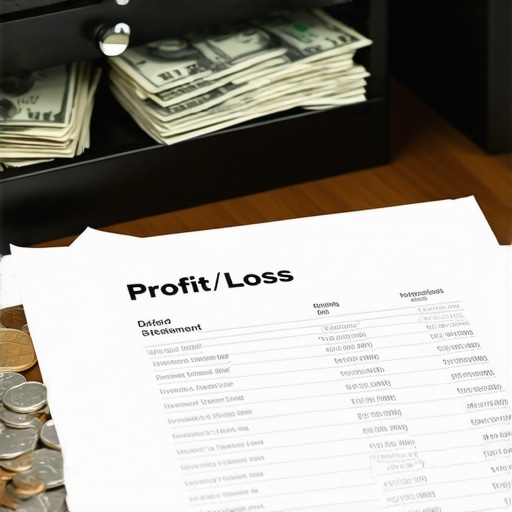
This Myth Has Been Sold to You
If you’re like most business owners, you’ve been told that your profit and loss statement (P&L) reflects your financial health. That a solid bottom line means cash is pouring in, and a shaky one means trouble. But I’m here to burst that bubble.
Here’s the raw truth: your P&L does not equal cash. Never did. Never will. I argue that relying solely on your profit figures to judge your business’s liquidity is like reading your speedometer to gauge your car’s fuel—completely missing the point.
In this article, I’ll show you why your financial reports are often misleading and how that could cost you your entire enterprise. Because the moment you understand the difference between profit and cash, you gain the power to make smarter decisions. So, why are we still treating these two wildly different things as if they were the same? The answer is simple: we’ve been duped by accounting systems that prioritize accruals over actual cash flow.
The Market is Lying to You
Many business owners believe that a profit on paper means liquidity. That if your books look good, your bank account will follow suit. But this couldn’t be further from the truth. Think of your financial statements as a chess move—important, yes, but not the game. The real game is played in the bank account.
For example, if you made a big sale but haven’t yet collected the cash, your P&L reflects revenue, but your bank account stays quiet. Conversely, if you paid a large expense upfront, your cash decreases, but your profit might be unaffected or even positive due to deferred recognition. This disconnect is where many entrepreneurs go astray.
To truly understand your financial health, you need to look at your cash flow. That’s the real heartbeat of your business. As I argued in how to audit your own books in 20 minutes, you should always correlate your bank statements with your financial reports. Without this, you’re flying blind.
In essence, your P&L is a story about profitability, not liquidity. Think of it as a game of chess where the focus is on capturing opponent’s pieces—strategy and skill—while ignoring the clock ticking down. The clock is cash, and if you ignore it, your game falls apart.
Why This Fails Your Business
Because our systems are designed around accrual accounting, not cash. And that’s no accident. Accruals make your numbers look better, smoother, less volatile. But they are not real. They are accounting fiction—nothing more.
If you want to survive, you must understand the difference. Your profit is your story; your cash is your truth. And if you’re not tracking the latter, you’re building your business on a foundation of sand.
One easy way to see this is to review your accounts receivable and payable—those numbers can hide impending cash shortages. As I explained in the 5-minute checklist for every new business bank statement, aligning these records regularly reveals the real story behind your numbers.
This disconnect becomes a sinking ship if you’re not vigilant. Because sooner or later, the cash runs out, and all those profits vanish. So, stop obsessing over your P&L and start demanding to see your cash flow statement. Your business depends on it.
The Evidence: Profit and Cash Are Not Twins
Look at your financial statements, and you’ll see the quick litmus test—profit. But here’s the twist: profit is not the same as cash. In fact, your profit figures can be manipulated, smoothed, and even inflated, yet your bank account may be running on empty. This isn’t a coincidence; it’s a systematic flaw rooted in how businesses are told to interpret their numbers.
For a moment, examine the typical scenario. A company reports a glowing profit margin, yet when you peek into the bank statements, the cash reserves are dwindling. The disconnect? Accrual accounting, which recognizes revenue and expenses when they occur, not when cash changes hands. This system benefits accountants—promoting a prettier picture—but it often *hides* the real liquidity status of a business.
The Root Cause: Systemic Dependence on Accruals
This isn’t an accident; it’s a design choice embedded in our financial infrastructure. The problem isn’t just bookkeeping laziness but a deliberate emphasis on accruals. Why? Because extraordinary profits are more visually appealing to investors and lenders. They want to see growth, not cash flow issues.
However, relying on a profit-led narrative ignores the lurking danger: receivables that aren’t collectible and payables that are coming due tomorrow. These numbers, kept pristine within the financial statements, are mere illusions absent in cash flow analysis. As a result, a company can look successful on paper while teetering on the brink of insolvency.
The Follow the Money: Who Gains from This Illusion?
The beneficiaries are clear. Accountants and financial advisors who promote accrual-based reports have a vested interest in presenting a rosy picture. Furthermore, businesses that hide behind these numbers can attract funding or inflate their valuation—often at the expense of stakeholders who are misled into believing they’re investing in a thriving enterprise.
Think about the timing—big sales recorded as revenue, yet cash not collected. Or suppliers extending credit, inflating profits temporarily. These practices aren’t anomalies; they’re baked into the system. They serve the interests of those who benefit from positive-looking reports, not the actual health of the business.
Moreover, policymakers and financial institutions often rely on these reports to assess creditworthiness. This reliance further entrenches the myth—cash flow becomes an afterthought, and crises are just waiting to explode when the illusion crumbles.
The Real Cost of the Illusion
This reliance on profit over cash fuels a dangerous misconception. It encourages business owners to chase after net income figures, neglecting the imperative of liquidity. The consequence? Sudden cash shortages that wipe out months or years of perceived progress. It’s a classic scenario where profits are celebrated, but the critical metric—cash—is ignored until it’s too late.
Evidence from recent economic downturns reveals the hazards vividly. Companies with solid profit statements but deficient cash flow management quickly falter. The myth persists because it’s more palatable, more attractive—a convenient narrative that obfuscates the harsh reality: cash is king, always.
**${PostImagePlaceholdersEnum.ImagePlaceholderB}**
Understanding this dynamic demands a shift—away from the glamour of profit figures and toward the stark, unadorned reality of cash flow. Until then, the illusion remains intact, masking the real contours of business health and setting the stage for inevitable failure.
The Trap in Clinging to Profit as the Gold Standard
It’s understandable why many believe that profit is the ultimate measure of business health. After all, profit signals success; it’s what investors chase, and what owners celebrate. The critics will say that qualitative measures like cash flow are secondary, perhaps even distracting from the core goal of profitability. They argue that profits represent growth and stability in the long run, and that fluctuations in cash are mere short-term nuisances.
But that line of thinking significantly oversimplifies the financial reality. While profit indicates how well a business has performed on paper, it doesn’t necessarily translate into liquidity or operational vitality. Relying solely on profit overlooks the critical importance of cash in day-to-day survival. This oversight can lead to catastrophic failure, despite glowing profit reports.
The Illusion of Profit Over Cash
What the critics often miss is that profit can be manipulated through accounting choices. For instance, a business can defer expenses or accelerate revenue recognition to inflate profits temporarily. This doesn’t mean the company has more cash on hand; it only means their books look better. I used to believe that profit was the best indicator of health, but I’ve since learned that profit can be a mirage—an attractive but deceptive surface that hides underlying problems.
Cash flow, on the other hand, is the real heartbeat of a business. Without sufficient cash, no matter how robust the profit appears, the business cannot meet its obligations, pay employees, or invest in growth. The critics’ focus on profit misses this vital point: without liquidity, profits are useless. They are the promises of future cash, not the cash itself.
Stop Focusing on the Wrong Question
The question should never be just about profit margins but rather about whether the business has enough cash to keep operating. The failure to recognize this is the core flaw in conventional financial analysis. The critics argue that profit is a sign of sustainable growth, but in reality, it’s merely a snapshot that can mislead if not coupled with a clear view of cash flow.
One dangerous trap is when entrepreneurs or managers rely solely on financial statements that emphasize profits. They can become complacent, assuming that the cash will eventually catch up. But cash flow issues often emerge long before profits decline—yet by then, it’s usually too late to reverse course. This is why I now insist that managing cash flow is just as critical as calculating profit.
Understanding this distinction is vital for entrepreneurs, especially those who think that as long as the books look good, everything is fine. The reality is that the profit-led narrative fosters a false sense of security, and that misconception can be the beginning of the end. We must not be fooled by the shiny veneer of profit when the real risk lies in cash shortages.
If you dismiss the importance of managing cash flow today, you are gambling with your entire enterprise. Financial reports showing profit might lull you into false security, but the real danger lies in the unseen cracks beneath this illusion. Ignoring the critical truth about cash flow sets off a chain reaction that accelerates towards disaster. Imagine steering a ship solely by looking at the sails, ignoring the water level beneath the hull. You might see the wind favoring speed, but the unacknowledged leak will eventually sink the vessel. Similarly, an overreliance on profitability metrics lets impending cash shortages go unnoticed until it’s too late. When the cash runs dry, operations halt, suppliers pull back, employees leave, and the business’s reputation crumbles—irrecoverable damage all because critical signs were ignored. This neglect doesn’t just threaten individual businesses; it fuels an economic crisis. As more enterprises collapse unseen, the ripple effects affect employment, supply chains, and consumer confidence. Systems built on this flawed logic—counting profits as the ultimate goal—are setting standards that undermine stability at a macroeconomic level. Continued ignorance of cash flow will lead to a future where business failures multiply. In five years, the landscape could be littered with abandoned startups, distressed companies, and a loss of trust in financial reports. Investors, lenders, and entrepreneurs will discover too late that the supposed indicators of health were mere facades masking the real issue—insufficient cash to sustain operations. Without a fundamental shift, this crisis will deepen, forcing a reckoning with the false narratives that have long dominated corporate finance. Policies and practices remain rooted in profits, neglecting harsh truths that cash is king—always has been, always will be. As businesses become increasingly vulnerable, economic resilience diminishes, and the social fabric suffers as unemployment rises and small businesses fail en masse. This pattern resembles ignoring a silent, rising flood while celebrating the view from dry land. When the waters finally breach the levees, the destruction is relentless. The economic storm waiting in the wings could wipe out entire sectors, erase savings, and destabilize communities—all because the warning signs from cash flow were left unheard. Should we wait until every business is crippled by avoidable crises, or is there a chance to turn the tide? The choice is stark. Recognizing and acting on the realities of cash flow today can prevent the catastrophe. Delaying only amplifies the damage, making recovery more painful and prolonged. In this moment, the urgency cannot be overstated. The window to shift from profit obsession to cash awareness is narrowing. Those who grasp the impending stakes and adjust now will emerge resilient, ready to face a turbulent economic future. The question isn’t just about survival—it’s about whether we will learn from history’s costly mistakes. <${PostImagePlaceholdersEnum.ImagePlaceholderD}> The final verdict is simple: relying solely on your profit and loss statement to gauge your business’s health is a dangerous illusion. While profits may look appealing on paper, they often hide a sinking cash reality that can crash your enterprise without warning. The twist is that profit is merely a narrative—an illusion crafted by accrual accounting—while cash flow reveals the unvarnished truth. If you cling to profits as your North Star, you’re sailing blind into an economic storm that will eventually sink your ship. Instead, shift your focus to cash flow, always tracking the money that’s actually moving in and out of your business. This isn’t just about better bookkeeping—it’s a fundamental shift in understanding what makes a business thrive or die. Embrace real-time cash management, audit your accounts receivable and payable regularly, and demand transparency from your CPA services. Otherwise, you’re building your future on a house of cards — a mirage of profitability that evaporates the moment cash runs short. To deepen your understanding, explore how tools like QuickBooks can streamline your bookkeeping and tax prep, ensuring every dollar is accounted for accurately. If you’re serious about mastering this, visit this guide to overhaul your financial system. The bottom line is clear: stop chasing the illusion, start managing the actual flow of cash. Align your numbers with reality, and your business will thank you for it. Don’t let the myth of profit seduce you into oblivion—your survival depends on facing the truth head-on. Are you ready to shatter the illusion and take control of your financial destiny? Dive into your cash flow today. Audit, monitor, and manage every dollar—and stop letting your business be a victim of its own fiction. Remember, the difference between thriving and surviving is often just a matter of real money in the bank, not the profit on your statement. It’s time to wake up. Your future depends on it. For ongoing insights, check out our contact page and start the journey beyond superficial numbers.What Are We Waiting For
Is It Too Late
Your Move
Final Challenge