
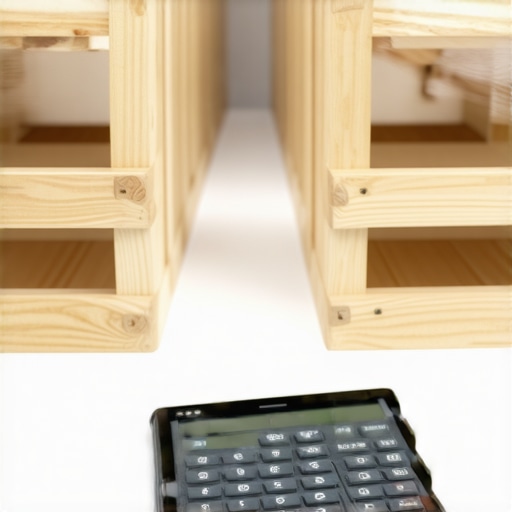
The Correct Way to Account for Custom Crating and Freight Costs
When a high-value asset – be it a delicate piece of Renaissance art, a multi-million dollar CNC machine, or sensitive aerospace electronics – leaves your facility, the physical journey is only half the story. For business owners and financial controllers, the logistical challenge of ensuring that item arrives safely is inextricably linked to the accounting challenge of how those expenses are recorded. Understanding the nuances of custom crating and freight costs is essential for maintaining a clean ledger and a healthy bottom line.
My name is Arturo J Peña, and I have spent the last 30 years at Pacific Crating and Shipping. I have seen firsthand how the physical act of a “crate and ship” operation can either streamline a company’s financial reporting or create a chaotic mess of untracked expenses. Many businesses view crating shipping as a simple overhead cost, but in the world of forensic accounting and high-stakes logistics, it is much more complex. The Real Reason Your Cost of Goods Sold Is Inflated often traces back to poorly categorized freight, where crating labor, materials, and carrier fees are lumped into a single, unhelpful bucket.
In this guide, we will bridge the gap between the warehouse floor and the accounting office, exploring the technical requirements of ASC 606, the logistical benefits of custom packaging, and the regional specifics of shipping in las vegas and beyond.
I. What is Custom Crating? The Physical Foundation of Asset Protection
To account for a cost correctly, one must first understand what that cost represents. In the logistics industry, a crating company provides far more than just a wooden box. Custom built crates are engineered solutions designed to mitigate specific risks: vibration, moisture, shock, and pressure changes. When you hire a crating service, you are investing in the preservation of your capital assets or your customer’s inventory.
Standard corrugated boxes are sufficient for small consumer goods, but for heavy or fragile items, packing and crating becomes a specialized trade. Custom crating services often involve several layers of protection:
- Internal Blocking and Bracing: Ensuring the item cannot shift within the crate.
- Cushioning: Using specialized foams or “floated” bases to absorb kinetic energy.
- Vapor Barriers: Essential for international shipping companies where ocean salt air can corrode metal components.
- Shrink Wrapping: Often searched for as shrink wrapping services near me, this process provides a tight, protective skin that prevents dust and moisture ingress.
For those shipping internationally, compliance is a significant cost factor. A professional crating company near me must adhere to ISPM-15 standards, which require heat-treated wood to prevent the spread of timber pests. If you are looking for art couriers or artwork shipping companies, the crating becomes even more specialized, often involving museum-grade “travel frames” or “slat crates” that allow the art to breathe while remaining protected from physical impact. These physical necessities translate directly into line items on your financial statements.
II. The Accounting Framework: ASC 606 and Shipping Costs
From a technical accounting perspective, the introduction of ASC 606 (Revenue from Contracts with Customers) fundamentally changed how we view crate & freight expenses. The primary question for any accountant is: Is the shipping and handling a “fulfillment cost” or a “separate performance obligation”?
Fulfillment Cost vs. Promised Service
Under US GAAP, if the shipping and handling activities occur before the customer obtains control of the goods, they are generally considered fulfillment costs. However, if the shipping occurs after control has transferred, the entity can elect to treat the shipping as a fulfillment activity rather than a separate service. This is a critical distinction for commercial freight services and 3pl logistics providers.
Principal vs. Agent Considerations
Are you the principal or the agent in the shipping arrangement? If your company controls the shipping service before it is transferred to the customer, you are the principal. This means you must report the gross amount of shipping revenue charged to the customer as revenue, and the costs paid to the crating company or carrier as an expense. You cannot simply “net” the two figures. This is a common pitfall that leads to inaccurate gross margin reporting.
Revenue Recognition Timing
If you are providing custom built crates as a stand-alone service, revenue is recognized when the crate is completed and control is transferred. However, if the crate is part of a larger shipping contract, the revenue recognition must align with the delivery terms (FOB Shipping Point vs. FOB Destination). Misaligning these can lead to significant issues during a year-end audit, especially if you have high-volume ltl shipping transactions occurring near the close of the fiscal period.
III. How Custom Crating Actually Lowers Freight Costs
It is a common misconception that custom crating services are merely an added expense. In reality, a well-engineered crate can significantly reduce the total cost of crate and ship operations. This is primarily due to the concept of Dimensional (DIM) Weight.
Carriers, whether they are international shipping companies or domestic commercial freight services, charge based on whichever is greater: the actual weight of the package or its dimensional weight. Dimensional weight is calculated by multiplying the length, width, and height of the package and dividing by a “DIM factor.”
When you work with a professional crating service, they design the crate to be as compact as possible while still providing maximum protection. By reducing the exterior dimensions by even a few inches, a crating company can save a business thousands of dollars in ltl shipping surcharges over a single quarter. To track this effectively, accountants should learn How to Set Up Custom Reports to Track Your Most Profitable Services, allowing you to see the “Net Freight Savings” generated by superior packaging.
Furthermore, using cross dock facilities in conjunction with custom crating allows for “consolidation.” Instead of shipping three separate, poorly protected items, a 3pl logistics expert can crate them together, reducing the “per-piece” handling fee and the risk of damage claims. From an accounting standpoint, the reduction in “Damaged Goods Allowances” is a direct benefit of investing in packing and crating.
IV. Regional Focus: Shipping and Warehousing in Las Vegas
The Las Vegas market presents a unique set of logistical and accounting challenges. As a global hub for trade shows and conventions, shipping in las vegas often involves tight deadlines and high-value, temporary installations. Companies like box brothers las vegas and las vegas packaging & distribution specialize in this high-turnover environment.
In this region, las vegas warehousing and warehousing las vegas services are often integrated with cross dock facilities. For an accountant, the challenge here is “inventory in transit.” When goods are sitting in a warehouse and storage facility in Nevada awaiting a trade show at the Las Vegas Convention Center, who owns the risk of loss? How are the storage fees being accrued?
If you are utilizing cross dock facilities for rapid distribution, the “velocity” of the inventory can make it difficult to track. Frequent “in-and-out” movements can lead to ghost inventory or unrecorded liabilities. This is why businesses in the Nevada corridor must be particularly diligent about reconciling their 3pl logistics invoices against their physical warehouse receipts. Whether you are dealing with art couriers for a gallery opening at Wynn or moving heavy machinery for a construction project, the las vegas packaging & distribution network requires a rigorous real-time accounting approach.
V. Common Accounting Pitfalls in Logistics
In my 30 years of experience, I have seen brilliant business owners struggle with their bottom line because they ignored the “small” costs associated with crating near me or shrink wrapping services near me. Here are the most frequent errors:
1. Miscategorizing Ancillary Fees
Shipping is rarely just the cost of the truck. It includes fuel surcharges, liftgate fees, residential delivery fees, and warehouse and storage charges. Many bookkeepers dump all of these into “Freight Expense,” which obscures the true cost of fulfillment. If your crating company also provides shrink wrapping services, that labor should be distinguished from the raw material cost of the wood used for custom built crates.
2. Failing to Reconcile 3PL Invoices
Automated bank feeds are a blessing and a curse. If you rely solely on your bank feed to record payments to 3pl logistics providers, you are likely missing the detail required to understand Why Your Gross Profit is High but Your Net Income Is Vanishing. You must reconcile the carrier’s invoice – which breaks down the crate & freight components – against the original quote to identify overcharges.
3. Improper Treatment of Prepaid Freight
If you pay for a large shipment or a year’s worth of warehouse and storage upfront, you cannot expense it all in one month. You must understand How to Account for Prepaid Expenses on Your Tax Return to ensure your monthly profit and loss statements aren’t wildly distorted by timing differences.
4. Ignoring the “Crating as an Asset” Opportunity
In some cases, especially with trade show displays or reusable custom built crates, the crate itself is not a consumable expense – it is a fixed asset. If a crate is designed to be used for 10 years of shows, it should be capitalized and depreciated, rather than expensed as a one-time crating service cost. This improves your EBITDA and provides a more accurate picture of your company’s value.
VI. The Role of Technology in Crate & Freight Accounting
Modern 3pl logistics and artwork shipping companies now use integrated Transport Management Systems (TMS) that can sync directly with accounting software like QuickBooks or Xero. This integration allows for “landed cost” calculations, where the cost of the custom crating services, the ltl shipping, and even the las vegas warehousing fees are automatically allocated to the specific item sold.
Without this level of detail, a business is flying blind. For example, if you are an art courier shipping a sculpture from New York to a cross dock facility in Las Vegas, the total “landed cost” includes the packing and crating, the insurance, the freight, and the final mile delivery. If you only account for the freight, you are underestimating your cost of goods sold by perhaps 20-30%.
Furthermore, international shipping companies often deal with VAT, duties, and customs brokerage fees. These are not custom crating and freight costs in the traditional sense, but they are part of the fulfillment chain. Professional crate services often handle the documentation for these, and your accounting system must be prepared to handle multi-currency transactions and duty deferral schemes.
VII. Expert Summary: Bridging the Logistics-Accounting Gap
The “correct way” to account for custom crating and freight costs is not found in a single ledger entry. It is a holistic process that requires communication between the warehouse manager and the CFO. By recognizing that custom built crates are an investment in risk mitigation and freight efficiency, rather than just a “box,” businesses can unlock significant hidden value.
To summarize the best practices:
- Categorize accurately: Separate crating labor, materials, and freight carrier fees.
- Comply with ASC 606: Determine if you are the principal or agent and recognize revenue accordingly.
- Leverage DIM weight savings: Use professional crating services to minimize the physical footprint of your shipments.
- Watch the regional details: Especially in high-demand areas like shipping in las vegas, keep a close eye on warehouse and storage accruals.
- Audit your 3PL: Never assume the invoice is correct; reconcile it against your quoted crate & freight rates.
Whether you are shipping heavy industrial equipment or delicate fine art, the principles remain the same. Precision in the crate leads to safety for the asset; precision in the accounting leads to safety for the business. If you need assistance auditing your current logistics spend or setting up more robust reporting, Contact Us at Acurate Accounting. For world-class logistical support and custom crating services, the team at Pacific Crating and Shipping is ready to put our 30 years of experience to work for you.