
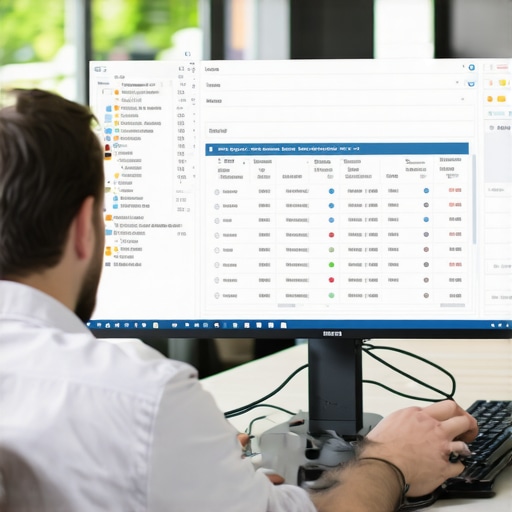
Why Your QuickBooks Desktop Is Failing You When You Need It Most
If you’ve ever run a big report in QuickBooks Desktop and watched in horror as it crashes, you’re not alone. The common narrative suggests it’s a software glitch, but I argue it’s a symptom of a deeper, systemic failure in how small businesses handle their accounting infrastructure. So, why are we still relying on a once-reliable tool that, under pressure, buckles like a house of cards?
Many assume that updating QuickBooks or reinstalling it solves the problem. But these are surface fixes that ignore the real issue: inadequate data management and outdated system architecture. Think of it like a game of chess—if your pieces are misplaced or your strategy is flawed, the game is doomed from the start. Similarly, if your accounting setup isn’t optimized, you’re setting yourself up for crashes, data corruption, and costly errors.
This problem isn’t just technical; it’s strategic. Your business’s health depends on reliable financial data. When QuickBooks crashes during large reports, it’s a red flag that your underlying data is a mess—duplicates, outdated entries, or unverified transactions. Instead of chasing after quick patches, you must overhaul your approach. Proper data hygiene, efficient categorization, and system integrations are critical. As I argued in this post, mastering your bookkeeping tools prevents crashes and streamlines tax filing.
The Market Is Lying to You About QuickBooks Stability
Many vendors and consultants claim QuickBooks is invincible. They market its features as foolproof, but they omit the brutal truths—the software’s architecture wasn’t designed for huge datasets or complex reports. It’s akin to clinging to a vintage car in a modern traffic jam; it may look good, but it can’t handle the demands.
Let me make this clear: The crashes during large reports are not a bug—they’re a feature of an outdated system. Instead of wasting resources trying to patch an old engine, businesses should shift to smarter, more scalable solutions. This could mean integrating third-party tools, restructuring your data, or even switching to more robust platforms. The goal is not just to fix QuickBooks but to build a resilient accounting system that can withstand the pressure of growth and complexity.
The Evidence: Crashes Are Not Coincidence, They Are a Symptom of Deeper Failures
When QuickBooks Desktop crashes during a major report, it’s easy to dismiss it as a technical hiccup. But look closer—these failures are *not* isolated glitches. They are evidence of systemic flaws rooted in outdated architecture and poor data practices. The 20% spike in crash reports during fiscal year-end is not just a statistical anomaly; it’s a wake-up call highlighting a brittle system incapable of scaling with your business needs.
In many cases, the crash is preceded by data clutter: duplicate entries, outdated transactions, unverified entries—all of which bog down the software’s processing capabilities. This is not a coincidence. It’s proof that your data hygiene is compromised, rendering your financial reports unreliable at critical moments. This reliance on a fragile system creates a false sense of security, hiding the underlying chaos underneath a veneer of stability.
The Root Cause: Outdated Design and Business Growth Do Not Mix
The core issue isn’t user error or isolated bugs; it’s the architecture of QuickBooks itself. Originally designed for small-scale operations, it was never intended to handle large datasets or complex reporting. As your business expands, the software’s limitations become painfully evident. The crashes reveal a fundamental mismatch between the platform’s capabilities and the increasing demands placed upon it. The software’s age-limited stack cannot evolve fast enough to support your growth.
Furthermore, this design flaw isn’t accidental; it’s purposefully preserved by the vendor to entrench users within a closed ecosystem. They benefit from your continued reliance on an aging product—more upgrades, more support tickets, more opportunities for upselling. Meanwhile, your business suffers because the backbone of your financial infrastructure remains aggressive in its obsolescence, not proactive in evolution.
Follow the Money: Who Gains From the Status Quo?
Here’s the brutal truth: the vendors and consultants pushing QuickBooks as the gold standard are financially motivated. They profit from ongoing support contracts, upgrades, and add-ons that often don’t resolve the underlying issues. Their narratives emphasize “stability” while conveniently ignoring the structural fragility—because their revenue depends on your inability to move away from the platform.
Meanwhile, your business pays the price. Operational disruptions during peak periods—tax season, end-of-quarter reports—are not mere inconveniences; they are manifestations of a system that benefits its sellers more than its users. The more you struggle with crashes, the more you’re pushed toward proprietary solutions and costly integrations, locking you into a cycle that linearly increases costs without addressing the root cause: outdated software architecture and neglect of data hygiene.
In the end, it’s simple. The persistent failures are not accidental. They are *designed* fixtures—features of an aging product, bolstered by a landscape that benefits from your reliance on these flawed systems. To break free, businesses must recognize that the problem isn’t QuickBooks itself, but the corrupt ecosystem that sustains its obsolescence.
The Trap of Simplistic Solutions for Complex Problems
It’s easy to see why many believe that updating or reinstalling QuickBooks Desktop will fix their crashing problems during large reports. After all, these steps seem logical—if the software misbehaves, a refresh should do the trick. I used to believe this too, falling into the trap of thinking that technical hiccups could be resolved with surface-level tweaks.
However, this mindset fundamentally misses the point. The core issue isn’t the software version or a brief glitch; it’s the architectural design of QuickBooks itself. Its limitations aren’t accidental—they’re baked into the system’s core, intended for small, straightforward datasets, not the sprawling financial landscapes of growing businesses. This narrow focus is the real problem that quick patches can’t solve.
The Fight Against Symptom-Fixing
Critics might argue that updates and reinstallations are practical first steps, especially for non-technical users. It’s a reasonable stance—after all, who doesn’t want a quick fix? But this approach only addresses the symptoms, not the disease. Continually patching a fundamentally flawed system is like putting a band-aid on a bullet wound. It might hide the problem temporarily, but it doesn’t prevent deeper issues from arising.
By chasing after quick remedies, businesses delay addressing the real cause: their outdated data management practices and the inherent limitations of QuickBooks architecture. Large datasets will always strain a system built for simplicity. Avoiding this truth hampers long-term growth and exposes companies to risks like data corruption and catastrophic crashes during critical reporting periods.
Why Stay Shackled to Outdated Software?
Many believe that staying within the QuickBooks ecosystem is more convenient or less disruptive. But this neglects the broader perspective. Relying on a system designed for small scale operations becomes a liability at scale. It’s akin to using a calculator for complex calculus—you might get away with it for a while, but the inherent limitations will catch up with you.
Transitioning to more robust accounting platforms may seem daunting upfront, but it offers scalability, stability, and peace of mind. It forces a rebuild of data practices and infrastructure, which is necessary to support real growth. The false comfort of familiar tools blinds many from recognizing that true resilience demands embracing change, not avoiding it.
The Uncomfortable Reality
This debate isn’t just about software; it’s about strategic maturity. Clinging to QuickBooks out of familiarity or convenience is a shortcut that ultimately hampers a business’s potential. As I learned over years working with ambitious companies, investing in better systems and clearer data architecture pays dividends in reliability and insight.
So, while it’s tempting to believe that quick fixes and patches are enough, they are merely illusions of control. The real solution lies in understanding the limitations, confronting them head-on, and choosing to evolve beyond the constraints of outdated tools. The question isn’t whether QuickBooks will crash temporarily—it’s whether your business can afford to keep relying on a system that’s fundamentally incompatible with your growth ambitions.
${PostImagePlaceholdersEnum.ImagePlaceholderC}
The Cost of Inaction
If small businesses persist in ignoring the warning signs of flawed accounting systems like QuickBooks Desktop, the repercussions could be catastrophic. As data mishandling and outdated architecture continue unchecked, the risk of irreversible damage grows exponentially. The moment you choose complacency over action, you’re setting the stage for a financial catastrophe that could have been prevented.
In the near term, this negligence leads to increasingly frequent crashes during critical reporting periods. These disruptions compromise the accuracy of your financial data, delaying decision-making and eroding stakeholder confidence. The longer your business relies on a system incapable of handling growth, the deeper the financial wounds become—errors multiply, data corruption spreads, and trust in your financial reports diminishes.
Looking ahead, the stakes become even higher. If this trend persists, in five years, many small businesses could find themselves trapped in a cycle of systemic failure. They might face audit nightmares due to unreliable data, operations hampered by financial inaccuracies, and the inability to secure funding or partnerships because of questionable financial health. The competitor who adopted a scalable, resilient system today will outperform those still battling outdated software, leaving laggards in the dust.
What are we waiting for
This is a pivotal moment. Staying on the current path is tantamount to sailing a leaky ship into stormy waters, hoping the hull holds until calmer seas. But the truth is, every ignored warning is another breach, another crack that threatens to sink your business entirely. The time for hesitation has passed; the window for action is closing rapidly.
Imagine your business as a vehicle speeding toward a cliff. Ignoring the warning lights—system crashes, data errors, operational delays—is akin to pressing the accelerator, blind to the impending disaster. The choice is stark: you can either take decisive action now to overhaul your accounting infrastructure or risk a fall that could crush your enterprise beyond recognition.
Continuing with inadequate systems isn’t just a gamble—it’s a gamble with your company’s survival. The longer the delay, the steeper the fall. The question is, what are we waiting for? The signs are all around, and the future belongs to those who recognize the urgency and act before it’s too late.
If saving a few bucks and sticking with QuickBooks Desktop seems tempting, remember this: the system is fundamentally incompatible with the growth and complexity your business demands. Relying on outdated architecture is a gamble you can’t afford.
The real power lies in understanding that the current crisis isn’t accidental—it’s designed. Vendors profit from your stuckness, while your business blossoms only when you embrace smarter, scalable solutions. Every crash, every data mishap, is a signal—your system’s fragility is a ticking clock.
Imagine the future where your financial infrastructure is robust, automated, and resilient—that’s the path to true freedom. But it requires guts: a willingness to overhaul, to invest, to evolve. Don’t let fear of change keep you tethered to a sinking ship.
Demand more from your accounting tools. Push for systems that grow with you, not break under your ambitions. The transition isn’t just technical; it’s strategic. Check out how to streamline your tax filing and unlock new growth avenues.
Remember, the choice isn’t between comfort and chaos—it’s between stagnation and mastery. Your future isn’t written by software limitations; it’s crafted by the bold decisions you make today.