
The Move for Recording Art Courier Insurance Claims Without Inflating Your Revenue
In the world of high-value asset management, fine art represents a unique intersection of aesthetic passion and significant financial risk. As a logistics specialist with over 25 years of experience navigating the complexities of museums, galleries, and private collections, I have seen firsthand that the most dangerous moment for a masterpiece isn’t when it is hanging on a wall – it is when it is in motion. According to research from Artwork Archive, transit-related incidents are the leading cause of insurance claims in the art world. Whether you are employing specialized art couriers or coordinating a multi-modal international move, the vulnerability of the work is at its peak the moment it leaves its climate-controlled sanctuary.
However, for gallery owners, collectors, and art advisors, the physical damage to a piece is often only the first half of a double-edged sword. The second half is the “Accounting Trap.” When a claim is successfully filed and an insurance check arrives, many bookkeepers and business owners instinctively record that payout as “Other Income” or “Revenue.” On the surface, this seems logical – money came into the bank, so it must be income. In reality, this is a critical mistake that can artificially inflate your top-line revenue, distort your profitability metrics, and lead to an unnecessary increase in your tax liability. Today, we are going to discuss the professional “move” for recording these payouts to ensure your financial integrity remains as intact as the art you protect.
Section 1: The High Risk of Art in Transit (The Logistics Reality)
Art doesn’t stay put, and neither do the risks associated with it. The logistics of moving high-value items require a level of precision that standard ltl shipping (Less Than Truckload) simply cannot provide. While generic freight services are excellent for durable consumer goods, they lack the specialized suspension, climate monitoring, and white-glove handling protocols mandatory for fine art. This is why the industry relies so heavily on dedicated art couriers.
When you engage artwork shipping companies or international shipping companies, you aren’t just paying for the space on a truck or a plane; you are paying for risk mitigation. Despite the best efforts of these professionals, the physics of transport – vibration, humidity fluctuations, and manual handling – means that claims are an inevitable part of the business. Understanding that transit is the primary point of failure allows you to better prepare your documentation before the truck even arrives at the loading dock. If your logistics chain involves multiple handoffs, the risk of a claim increases exponentially, making the clarity of your financial records even more vital.
Section 2: The “Accounting Move” – Recording Payouts Without Inflating Revenue
The technical core of managing a claim payout lies in how you categorize the incoming funds in your general ledger. If you record an insurance check as revenue, you are telling the IRS and your stakeholders that your business earned that money through its primary operations. This is “phantom income.” It skews your project profitability and makes it appear as though you are having a record-breaking year, even if you just lost a primary asset.
The correct “move” is to record the payout as a reduction of the loss or the associated expense. When a piece of art is damaged or lost, you likely incurred costs: the original purchase price (if inventory), the cost of the crating service, and the shipping fees. To handle this correctly, you should read our guide on How to record insurance payouts for business property damage. Essentially, the insurance check should be credited against the “Loss on Inventory” or a specific “Insurance Claim Receivable” account that was set up when the damage was first reported.
Think of the insurance payout not as “new money,” but as a reimbursement for a loss already sustained. By crediting the expense account or the loss account, you bring that balance back toward zero, rather than pushing your income account higher. This is similar to the logic used when you record a vendor refund without inflating your income. Maintaining this distinction prevents your year-end reports from showing a false “profit” that is actually just the recovery of capital.
Section 3: Proving Value – Documentation Needed for a Successful Claim
Insurers are not in the business of handing out money without rigorous proof. To ensure a claim is paid out in full, you must provide a bulletproof paper trail. This begins with the original gallery invoice and a current appraisal. As noted in the Critical Craft Forum, insurers often look for discrepancies between the declared value and the actual price paid. If you are shipping a piece that has appreciated significantly, a “date-of-shipment” appraisal is your strongest asset.
Furthermore, your logistics documentation must be impeccable. This includes the Bill of Lading, the condition report from the art couriers, and the invoices for crate & freight. If these documents are disorganized, you risk a denial or a partial payout. Many businesses find that Why Your Artwork Shipping Company Invoices Are Messing Up Your Month-End Close is a common hurdle – if you can’t reconcile what you paid for shipping and insurance at the time of the move, proving the loss later becomes a nightmare.
Section 4: Physical Standards – Why Your Crating Choice Affects Your Claim
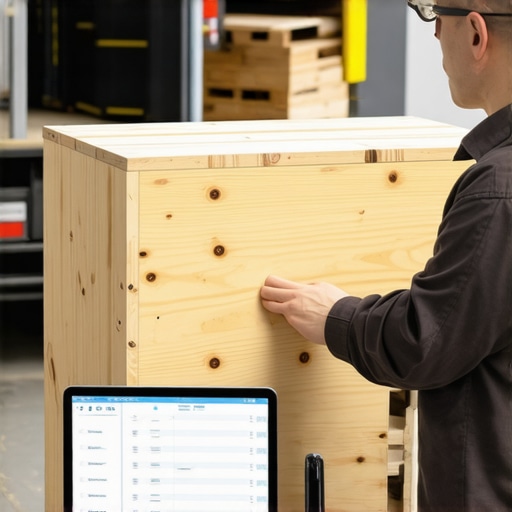
One of the most common reasons insurance claims are denied is “insufficient packaging.” If you attempt to save money by using a standard crating company that doesn’t specialize in fine art, you may be inadvertently voiding your insurance policy. Fine art requires custom built crates designed specifically for the dimensions, weight, and fragility of the piece. These crates often include internal “float” systems, archival lining, and vapor barriers.
When searching for a crating company near me or shrink wrapping services near me, ensure they understand the difference between industrial packing and fine art packing. A standard crate services provider might use acidic wood or insufficient cushioning that can damage a painting’s surface over a long haul. From an accounting perspective, these costs are often significant. It is important to understand Why Your Custom Built Crates Are Often Misclassified on the Balance Sheet. Because these crates are sometimes reusable, they may need to be treated as assets rather than immediate expenses. Additionally, you should implement The Simple Move for Tracking Custom Crating and Packaging Deposits Without Skewing Your Bank Feed to ensure your cash flow remains transparent during the crating process.
Section 5: The Las Vegas Logistics Hub – Warehousing and Cross-Docking
Las Vegas has emerged as a critical pivot point for art moving between the East Coast and the West Coast. The rise of las vegas warehousing and warehousing las vegas facilities provides a strategic staging ground for collections. However, the use of cross dock facilities in Nevada introduces new accounting complexities. Cross-docking – where art is moved from one vehicle to another with minimal storage time – is efficient but creates a “blind spot” in the chain of custody if not documented correctly.
If you are using shipping in las vegas or services like box brothers las vegas for las vegas packaging & distribution, you must be diligent about auditing your storage bills. High-value storage often carries “lien” risks and insurance surcharges that are buried in the fine print. I always recommend that my clients learn How to Audit Your Warehouse and Storage Invoices for Hidden Overcharges to ensure they aren’t paying for “ghost” space or redundant insurance coverage already provided by their primary policy.
Section 6: Avoiding the Audit Trap – 3PL and Crating Invoices
The final hurdle in the “Move” is the reconciliation of 3pl logistics (Third-Party Logistics) invoices. These companies often provide a bundled suite of services: commercial freight services, packing and crating, and warehouse and storage. While convenient, these bundled invoices are a primary target for auditors because they often lack the granularity needed to distinguish between deductible expenses and capitalizable costs.
When a crating shipping invoice arrives, it should be broken down into its component parts. If it isn’t, you run the risk of triggering red flags. Understanding Why Your 3PL Logistics and Crating Invoices Are Triggering Audit Red Flags is essential for any high-volume gallery or collector. Furthermore, these invoices often include sales tax on services that may be exempt or vice versa, leading to situations where Why Your Crating and Freight Invoices Are Triggering Unnecessary Tax Questions becomes a recurring problem during tax season.
Conclusion: Protecting Your Assets and Your Ledger
In the high-stakes world of fine art, the physical protection of the work is only half the battle. As we have explored, the way you record the financial aftermath of a transit mishap is just as critical to your long-term success. By avoiding the “Accounting Trap” of recording insurance payouts as revenue, and by insisting on the highest standards for custom crating services and art couriers, you protect both your collection and your bottom line.
Don’t let a logistics mishap turn into a tax nightmare. Whether you are dealing with crate and ship logistics or complex international shipping companies, your accounting needs to be as precise as the crating. If you are concerned that your current bookkeeping is inflating your revenue or misclassifying your logistics costs, contact Acurate Accounting today for a comprehensive financial review. Let’s ensure your “move” is the right one.