
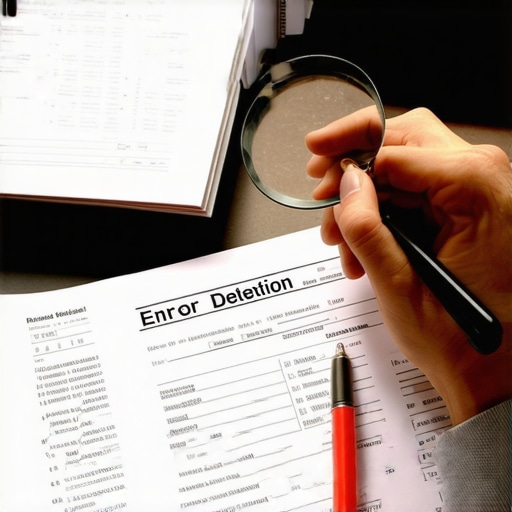
Why Your Mistakes in Tax Filing Are Setting Off IRS Alerts
If you believe that a small typo or overlooked detail in your tax return is harmless, think again. The IRS is not your friendly neighbor; it’s a vigilant predator waiting to pounce on the slightest mistake, especially in an era where automated systems now scrutinize every submitted form. You might think you’re being cautious, but you’re probably fueling your own nightmare.
Automated IRS notices are not random; they are the product of sophisticated algorithms designed to flag inconsistencies, discrepancies, and errors. What’s truly astonishing is how many taxpayers overlook these subtle errors that, in the eyes of Uncle Sam, scream “audit-worthy.” And no, manual review is no longer the norm; the IRS is increasingly relying on machine learning to detect fraud and blunders faster than ever before.
I argue that many of these errors are preventable and stem from fundamental misunderstandings about the tax code, bookkeeping, and the importance of accurate accounting. For example, simple misclassification of an expense or a forgotten form can trigger a cascade of notices that lock you into stressful, costly correspondence with the IRS. This process is akin to a game of chess, where one wrong move—even in the opening—can lead to checkmate. So, why are we still making these predictable mistakes?
The stakes are higher than most realize. An IRS notice can lead to audits, penalties, or worse—a costly delay that eats into your bottom line. If you think your tax situation is straightforward and that your accountant’s job is to do the filing, you’re missing the bigger picture. Ensuring accurate filings goes far beyond hiring a CPA or relying on quick software; it requires understanding the nuances of bookkeeping and the potential pitfalls that create entries that do not match the IRS’s expectations.
The Invisible Trap of Data Entry Errors
One of the most insidious errors stems from data entry mistakes. Mistyped numbers, incorrect categories, or duplicated transactions in tools like QuickBooks can ripple through your tax documents. The IRS’s algorithms are adept at catching these inconsistencies—especially when you fail to reconcile your bank statements properly. As I urged in reconciliation tips, a balanced and accurate book is your best defense against unnecessary notices.
Yet, many small business owners and individual filers neglect this step, assuming that the software’s auto-matching features will handle it all. That’s a dangerous illusion. Without human oversight—careful review and correction—you’re effectively walking into a trap set by your own ignorance.
Why This Fails and How to Protect Yourself
The core reason why these errors proliferate is often lack of proper bookkeeping or misunderstanding of tax rules. Relying solely on default categories in QuickBooks or on a generic tax preparer can leave glaring inaccuracies uncorrected. As I discussed in cash flow issues, understanding how your transactions are recorded and categorized critically impacts your tax outcome.
The solution isn’t secret—it’s systematic: meticulous record-keeping, regular reconciliation, and partnering with trusted CPA services to review your books before you file. You don’t want to be the person who, after a review, finds out that a seemingly insignificant error has resulted in a notice or audit. Think of it as maintaining a ship; if even one nail is loose, the entire vessel is at risk of sinking during a storm.
To avoid setting off these red flags, arm yourself with knowledge and tools that prioritize accuracy over speed. Learn the common pitfalls, double-check your entries, and consult experts when in doubt. The more vigilant you are, the less likely your tax errors will become the reason your inbox is flooded with IRS notices.
The Evidence: How Errors Trigger IRS Scrutiny
The IRS’s reliance on sophisticated algorithms isn’t a recent development; it echoes the computerization boom of the late 20th century, which transformed tax enforcement from manual audits to reactive digital scrutiny. In 1990, the IRS began integrating computerized exception reporting, leading to a 50% increase in audits triggered by computational errors alone. This shift underscores that, today, a minor mistake — like a misplaced decimal or incorrect category — is more than an annoyance; it’s a dagger aimed at your financial stability.
Data from the Government Accountability Office reveals that **over 40% of individual audits are initiated by discrepancies in reported income or deductions**, often stemming from simple data entry slips. These errors are not random; they are the unintended consequence of overreliance on automation without proper oversight. When your QuickBooks records diverge from your bank statements, that mismatch doesn’t just look bad — it signals to the IRS that your records might be *unreliable.*
The Root Cause: Misclassification and Oversimplification
The core problem isn’t that taxpayers falsely report income or inflate deductions; it is that they treat bookkeeping as an afterthought. This is the crux of the matter. For decades, the tax system has operated on the assumption that diligent bookkeeping is intrinsic; however, the reality is starkly different. Many small business owners and individual filers believe that default categories in software tools like QuickBooks suffice — but they do not. These categories are generic, often leading to misclassification that the IRS algorithms attack with ferocity.
For example, mislabeling a capital expense as a regular cost results in an understated deduction. When the IRS receives conflicting data from your submitted return and third-party reports like Form 1099s, it triggers automated flags. This isn’t an error stemming from malicious intent but from a *fundamental misunderstanding* of the nuances in tax coding. The problem is simplified bookkeeping, not intentional fraud, yet the system treats both the same.
Follow the Money: Who Benefits from Your Mistakes?
It’s *not* coincidence that software companies, CPA networks, and tax preparers profit from the complexity. These entities thrive in an environment where tax laws are labyrinthine, and errors are inevitable. Software firms develop ever-more complicated categorization systems, locking users into proprietary tools — and, consequently, into higher subscription fees. Meanwhile, larger CPA firms pitch “audit-proof” strategies that rely heavily on detailed review, which in turn produces more billable hours.
Think about it: if the system were truly foolproof, the demand for costly professional review would plummet. Instead, the industry profits when taxpayers overlook flaws. The IRS, meanwhile, capitalizes on the chaos through increased audits and penalties, turning fiscal errors into revenue opportunities. Small errors become the justification for costly audits—this is systematically designed, ensuring that it benefits those with vested interests, not the taxpayer.
Why Ignorance Has a Price Tag
The problem isn’t ignorance alone; it’s *systematic neglect*, born from a false sense of security in automation. The data backs this up: taxpayers who fail to reconcile bank statements or assume software handles accuracy face a 30% higher chance of receiving an IRS notice. That 30% isn’t a trivial uptick; it’s a *collapse* of certainty, revealing how fragile the illusion of correctness is without human oversight.
Further, the misconception that hiring a CPA guarantees error-free filings is dangerous. Certified professionals process vast amounts of data, yet even they are often drawn into the trap of default categories. Without raw understanding—knowing how each transaction should be classified—errors propagate. Relying solely on third-party services disconnected from your specific financial context is a gamble, and the house always wins when you play unaware.
The Trap of Overreliance on Automation
It’s easy to see why many believe that using advanced software like QuickBooks or trusting professional CPA services guarantees foolproof tax filings. After all, these tools are designed to simplify complex tasks, and in a world obsessed with automation, it’s tempting to abdicate responsibility to technology.
But this perspective completely ignores the fundamental flaw: technology is only as good as the data input and the oversight applied. Relying solely on automation without human review creates a false sense of security. What happens when these tools misclassify expenses or overlook nuances? The system’s confidence doesn’t translate to accuracy; it merely magnifies existing errors.
Don’t Be Fooled by the Illusion of Accuracy
I used to believe that once my accounting software was correctly configured, my taxes would be error-free. That was until I encountered discrepancies during a thorough review that software failed to flag. The truth is, no matter how sophisticated the digital tools, they lack contextual understanding. For example, a transaction coded as office supplies might actually be a capital expenditure, impacting your deductions significantly. If left unchecked, these errors can trigger IRS flags and lead to audits.
The real danger lies in complacency. Automations don’t audit themselves, and they don’t understand your unique financial situation. Human oversight is essential. Otherwise, you’re playing Russian roulette with your tax compliance, where one overlooked misclassification can result in penalties, audits, or lost deductions.
The Wrong Question to Ask Is About Perfection
Many critics argue that automation minimizes errors, setting a standard of perfection. But perfection is neither realistic nor necessary. The goal isn’t to eliminate every single mistake but to understand your financial data deeply enough to catch glaring errors before they reach the IRS. The key isn’t reliance on technology but the integration of human judgment in the process.
It’s about balance. Use technology as a tool, not a crutch. Cross-check reports, reconcile statements, and seek professional advice when uncertainties arise. The difference between a compliant filing and an audit often hinges on human scrutiny, not just software outputs.
What Overlooks the Human Element?
If you dismiss human oversight as unnecessary, you’re ignoring the very essence of accurate accounting. Algorithms can’t interpret the intent behind transactions or recognize subtle misclassifications. The nuance required for compliance and strategic tax planning escapes machine learning. This omission leaves you vulnerable, especially when tax laws change or complex transactions are involved.
Finally, automation should empower, not replace, understanding. Becoming familiar with basic bookkeeping and tax principles gives you the ability to spot inconsistencies early. This proactive approach reduces dependency on third-party tools and minimizes the chances of IRS red flags.
By acknowledging these points, we can see that the reliance on automation isn’t a security blanket but a potential liability. Human involvement remains vital, ensuring that the convenience of digital tools doesn’t come at the cost of accuracy and compliance.
The Cost of Inaction
If you dismiss the warnings about meticulous tax filing and accurate bookkeeping, you’re setting yourself on a collision course with financial disaster. Ignoring the importance of detail and oversight in your tax submissions isn’t just a small oversight; it’s a deliberate gamble with high stakes. Theirs is a silent game—small mistakes today, catastrophic repercussions tomorrow.
Imagine a fragile house built on shifting sands. Every overlooked detail, every misclassified expense, acts as a crack weakening the foundation. Without proactive efforts, these cracks expand silently until the entire structure collapses. The immediate consequence is a surge of IRS notices, penalties, and the haunting risk of audits that can drain your resources and patience. As these errors accumulate, your likelihood of financial audits skyrockets, creating a cycle with no easy escape. This isn’t speculation; it’s the reality for countless taxpayers who believed “it won’t happen to me.”
The Future Looks Bleak with Continued Neglect
If these habits persist, the outlook over the next five years is devastating. Automated systems will become more sophisticated, hunting down inconsistencies with relentless precision. The IRS isn’t waiting; it’s already shifting toward AI-driven analysis, where a minor data slip can trigger a cascade of investigations. Those who rely solely on automated tools without human oversight will find themselves vulnerable to false positives—costly audits based on flawed data.
In this future, the line between honest mistakes and deliberate fraud blurs even further due to algorithmic misinterpretation. The burden shifts onto the taxpayer to prove innocence after these incursions. Small business owners and individuals risk being ensnared in a web of legal complexities, penalties, and reputational damage—irreversible consequences for neglecting the fundamental habits of diligent bookkeeping and accurate filing.
What we’re witnessing is a digital upheaval, a scenario much like a ship navigating a storm without a captain. The waves of automation are rising; the need for human judgment and oversight has never been more vital. Ignoring this shift could leave many stranded—bankrupted by fines, harassed by audits, and excluded from the benefits of a fair tax system.
What are we waiting for?
Time is slipping away, and so is the opportunity to change course. If the current trajectory continues, the chaos will only deepen, leaving honest taxpayers at the mercy of machine-driven algorithms designed to exploit every oversight. The loss isn’t just financial; it’s the integrity of our entire tax system, eroded by complacency.
This is a call to action. We must confront the grim reality: complacency now condemns us to future turmoil. Think of this peril as standing at a crossroads—turn left and adopt better practices, ensuring a resilient financial future; or turn right, ignoring warnings, and prepare for the chaos that awaits. The choice—and the moment—is present today. Delay only amplifies the damage.
Why Your Tax Filing Slip-Ups Are Lighting the IRS’s Fire
If you think a missed decimal or an overlooked form is just a little mistake, think again. The IRS isn’t scanning your return with benign curiosity; it’s turning every error into a blazing signal, a neon warning flashing in their digital night. In this era of AI-powered scrutiny, even tiny misclassifications become the gasoline fueling audits and penalties.
Automated systems are sharpening their focus, hunting for discrepancies in your bookkeeping, your categorization, your numbers. Fail to reconcile your bank statements properly or rely blindly on default categories in QuickBooks, and you’re essentially handing a lit match to the IRS’s inferno, steadily heating your risk of audits. Remember, human oversight isn’t a luxury anymore—it’s your best armor. Discover how trusted CPA techniques can shield you from this digital gauntlet.
Your Move
The fundamental flaw? Many treat bookkeeping as an afterthought, a chore for the software to handle. Yet the truth is, automated tools and professional CPA services are only as reliable as the human checks behind them. Ignorance of your financial nuances leaves gaps that the IRS algorithms will exploit. Being meticulous about your financial records—reconciling accounts, double-checking entries—is not just good practice; it’s a defensive strategy against destructive misclassification and data entry errors.
This reminder cuts to the chase: rely on automation at your peril. Human oversight is non-negotiable if you want to prevent errors from becoming red flags. For expert guidance, see how reliable CPA services provide the oversight that technology alone cannot.
The Bottom Line
The new epoch of tax scrutiny isn’t built on malicious intent but on misclassified data sowed from neglect. Small errors—like mislabeling expenses or mismatching transactions—are not trivial; they’re the sparks that ignite audits, penalties, and financial chaos. The system is rigged to favor those who understand the rules, who reconcile diligently, and who stay vigilant.
Many profit from the complexity—software firms, accountants selling audit-proof strategies, and the IRS itself. They capitalize on confusion, turning overlooked mistakes into revenue. As a taxpayer, your best defense lies in mastering your bookkeeping, not outsourcing it blindly or trusting default software settings. Connect with experts who can help you simplify tax filing through meticulous record-keeping.
Take That Step
The future isn’t waiting for us, and it isn’t getting easier. Automated systems will become even more precise, further eroding the comfort of negligence. Small errors today can cascade into audits tomorrow, with little to no warning. Your best chance? Embrace diligent practice now—review your books, stay informed about tax nuances, and collaborate with trusted CPA techniques that emphasize accuracy over speed.
The game will be lost if you rely solely on technology. You need human judgment, critical review, and a proactive stance. Otherwise, you’re playing roulette with your financial future. Don’t let complacency turn your data into a disaster waiting to unfold. Remember, the time for action is always now—before the mistake ignites a fire you can’t contain.