
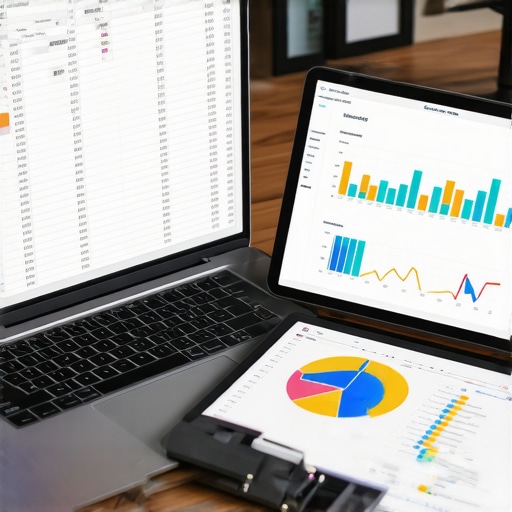
Your Spreadsheet is a Financial Suicide Note
Stop pretending Excel is a legitimate accounting tool. It is a calculator on steroids, nothing more. If you are still relying on a .xlsx file to track your revenue and expenses, you are not running a business; you are managing a hobby that the IRS is eventually going to dismantle. I argue that the cult of the spreadsheet is the single greatest threat to small business survival today. You might think you are being frugal by avoiding software fees, but you are actually gambling with your company’s future. You think you have a handle on your numbers, but you are wrong.
Why do we do this to ourselves? Is it the comfort of the familiar? Is it the illusion of control? Every manual entry is a wide-open doorway for disaster. One misplaced decimal point, one accidental deletion, and your entire financial history becomes a work of fiction. Using Excel for bookkeeping is like trying to pilot a commercial jet with a bicycle handlebar. It feels familiar in your hands, but it is completely inadequate for the altitude you are trying to reach. You need reliable CPA services ensuring accurate accounting for small businesses, not a grid of cells that cannot think, verify, or protect you.
The so-called “free” nature of spreadsheets is a lie. It is the most expensive software you own because of the hidden tax of your own time. When you spend five hours hunting for a formula error that broke your balance sheet, you are not saving money. You are losing the chance to actually grow your revenue. Even worse, you are likely missing out on thousands in legal deductions because your static table does not know how to categorize your spending. I have seen founders think they were organized, only to realize the common bookkeeping mistakes that trigger IRS audits every time were baked into their spreadsheet logic from day one.
Your Manual Data Entry is an IRS Invitation
Excel does not flag errors. It does not tell you when a transaction is missing or duplicated. It just sits there, silently letting you walk off a cliff. If you want to stay under the radar and keep your sanity, you must stop using tools that require you to be perfect every single time. Real businesses need systems, not cells. This is why I advocate for QuickBooks mastery and streamlining your bookkeeping. Automation removes the human element of failure. When you link your accounts, the data flows directly. You do not type it; you verify it. Why would you choose a manual process that invites scrutiny when you could have a system that creates an audit trail automatically?
Let us be blunt: a spreadsheet is static, while your business is dynamic. When you scale, that spreadsheet will not grow with you; it will break. It will become a bloated, fragile mess of linked workbooks that no one—including you—actually understands. You are building a house of cards and calling it an empire. And let us talk about the end-of-the-month ritual. Most owners ignore it, waiting until April to scramble through a year of tabs. I believe you must reconcile every month instead of once a year, or you are flying blind. Excel makes reconciliation a nightmare; professional software makes it a requirement. So, why are we still doing this? Why are we clinging to a tool created in the 80s to solve 21st-century problems? The hard truth is that Excel breeds complacency. It lets you believe your data is good enough until the moment you apply for a loan and the bank laughs at your homemade profit and loss statement. Your manual ledger is not a badge of honor; it is a red flag of amateurism.
The Structural Failure of the Grid
The problem is not your inability to type or your lack of focus. The problem is the fundamental lack of a double-entry guardrail within the spreadsheet architecture. In a real accounting system, every debit must have a credit. The system demands balance. Excel demands nothing. It is a vacuum of accountability. You can enter a million-dollar expense into a cell, and the spreadsheet will simply wait for the next command, never once asking where that money came from or which account it depleted. This isn’t just a technical limitation; it is a structural flaw that invites fraud and catastrophic oversight.
We see this in the real world, and the results are never pretty. Remember the infamous ‘London Whale’ debacle where JPMorgan Chase lost billions? The root cause wasn’t a complex market shift; it was a copy-paste error in an Excel file. If a global banking titan with thousands of analysts can lose billions because of one faulty cell, what makes you think your small business is immune? That 88% error rate found in most spreadsheet audits isn’t just a statistic; it’s a guaranteed failure point for your business. It is a ticking time bomb buried in your ‘Expenses’ tab.
${PostImagePlaceholdersEnum.ImagePlaceholderB}
A Culture of False Certainty
Excel creates a dangerous psychological trap: the illusion of precision. Because the numbers are neatly organized in rows and columns, we assume they are correct. We mistake formatting for accuracy. I argue that the spreadsheet is the ultimate enabler of financial delusion. You look at a pivot table and see a profitable quarter, but you are looking at a house of cards. Without the rigid audit trails provided by QuickBooks mastery and streamlining your bookkeeping, your data is just an opinion. It has no verifiable history. It has no ‘why’ behind the ‘what.’
The root cause of most small business failures isn’t a lack of talent; it’s a lack of visibility. When you use a static tool for a dynamic financial environment, you are essentially looking through a rearview mirror that only updates once a week. Or once a month. Or, for the truly reckless, once a year. By the time you realize your margins have evaporated, the damage is done. You cannot fix what you cannot track in real-time. This is why the spreadsheet is a liability, not an asset. It encourages you to look backward when you should be looking forward. It forces you into a reactive stance, constantly patching holes in a sinking ship instead of steering toward growth. Real financial health requires a system that challenges your data, not one that blindly accepts it.
The Hidden Cost of the ‘Free’ Solution
Let’s talk about the money. You think you are saving fifty dollars a month on a software subscription. You aren’t. You are paying a massive, invisible tax on your own focus. Every hour you spend debugging a #REF! error or trying to figure out why your totals don’t match your bank statement is an hour you didn’t spend selling, innovating, or leading. Your time is worth more than the cost of professional tools. By clinging to the ‘free’ grid, you are effectively telling the market that your executive time is worth zero. It is a poverty mindset applied to a growth ambition, and those two things cannot coexist. The math is simple: a spreadsheet costs you your future.
I hear the pushback already. You argue that your business is ‘unique.’ You claim that off-the-shelf software is too rigid for your specific workflow. You love the freedom to create custom formulas that map perfectly to your brain. It is easy to see why people think this level of customization is an asset. They see a blank canvas and think they are painting a masterpiece of financial clarity. They believe that by building their own system, they understand their numbers better than anyone using a ‘black box’ like QuickBooks. It is a seductive argument because it appeals to our desire for control and our ego as founders who think we have discovered a better way to do the basics.
But this is where the logic falls apart. That very flexibility you prize is exactly what makes your data untrustworthy. In the world of finance, flexibility is just another word for ‘lack of standards.’ I used to believe this too, until I watched a brilliant founder struggle to explain a forty-thousand-dollar discrepancy to a skeptical auditor because they had ‘customized’ their way out of a standard double-entry system. Their spreadsheet was a work of art, but it was not a record of reality. When you build your own accounting logic, you are assuming you are smarter than the collective wisdom of the accounting profession. Professional software is not rigid because it is lazy; it is rigid because it is a guardrail.
Flexibility is a Fatal Flaw
Software forces you to categorize correctly. It forces you to reconcile. When you bypass these standards in favor of your ‘special’ grid, you are not being innovative. You are being reckless. You are removing the safety nets that prevent you from making catastrophic assumptions about your cash flow. The ‘free’ argument is the most insulting of all. You are not just paying with your time; you are paying with the integrity of your data. If you have to spend even ten minutes verifying a formula, the software has already paid for itself. The illusion of the ‘free’ spreadsheet is the ultimate trap for the small business owner who values their ego over their scale. You think you are saving pennies, but you are burning the house down to keep warm.
${PostImagePlaceholdersEnum.ImagePlaceholderC}
The hard truth is that if your business is too ‘unique’ for standard accounting software, you probably do not have a business—you have a mess. Standard software exists because financial rules are standard. Revenue is revenue. Expenses are expenses. The IRS does not care about your creative ‘workarounds’ or your colorful tabs. They care about the trail. They care about the math. When you choose the grid over the system, you are choosing a tool that lacks the fundamental DNA of accountability. You are building on sand and wondering why the walls are cracking. Professional tools do not just track money; they enforce the discipline required to keep it. Without that discipline, your flexibility is just a slow-motion crash.
Consider the psychological cost of the ‘flexible’ grid. Every time you open that file, there is a micro-stressor in the back of your mind: Is this the version where the formulas actually work? Did I remember to update the tax rate cell? That mental load is the silent killer of productivity. By outsourcing the ‘how’ of accounting to a proven system, you free your brain to focus on the ‘what’ and the ‘why’ of your business growth. You stop being a data-entry clerk and start being a CEO. Stop defending a tool that was never meant to carry the weight of your company. The grid is a playground; professional software is the foundation. Choose the one that actually supports the weight of your ambitions.
Your Spreadsheet is a Financial Suicide Note
Stop pretending Excel is a legitimate accounting tool. It is a calculator on steroids, nothing more. If you are still relying on a .xlsx file to track your revenue and expenses, you are not running a business; you are managing a hobby that the IRS is eventually going to dismantle. I argue that the cult of the spreadsheet is the single greatest threat to small business survival today. You might think you are being frugal by avoiding software fees, but you are actually gambling with your company’s future. You think you have a handle on your numbers, but you are wrong.
Why do we do this to ourselves? Is it the comfort of the familiar? Is it the illusion of control? Every manual entry is a wide-open doorway for disaster. One misplaced decimal point, one accidental deletion, and your entire financial history becomes a work of fiction. Using Excel for bookkeeping is like trying to pilot a commercial jet with a bicycle handlebar. It feels familiar in your hands, but it is completely inadequate for the altitude you are trying to reach. You need reliable CPA services ensuring accurate accounting for small businesses, not a grid of cells that cannot think, verify, or protect you.
The so-called “free” nature of spreadsheets is a lie. It is the most expensive software you own because of the hidden tax of your own time. When you spend five hours hunting for a formula error that broke your balance sheet, you are not saving money. You are losing the chance to actually grow your revenue. Even worse, you are likely missing out on thousands in legal deductions because your static table does not know how to categorize your spending. I have seen founders think they were organized, only to realize the common bookkeeping mistakes that trigger IRS audits every time were baked into their spreadsheet logic from day one.
Your Manual Data Entry is an IRS Invitation
Excel does not flag errors. It does not tell you when a transaction is missing or duplicated. It just sits there, silently letting you walk off a cliff. If you want to stay under the radar and keep your sanity, you must stop using tools that require you to be perfect every single time. Real businesses need systems, not cells. This is why I advocate for QuickBooks mastery and streamlining your bookkeeping. Automation removes the human element of failure. When you link your accounts, the data flows directly. You do not type it; you verify it. Why would you choose a manual process that invites scrutiny when you could have a system that creates an audit trail automatically?
Let us be blunt: a spreadsheet is static, while your business is dynamic. When you scale, that spreadsheet will not grow with you; it will break. It will become a bloated, fragile mess of linked workbooks that no one—including you—actually understands. You are building a house of cards and calling it an empire. And let us talk about the end-of-the-month ritual. Most owners ignore it, waiting until April to scramble through a year of tabs. I believe you must reconcile every month instead of once a year, or you are flying blind. Excel makes reconciliation a nightmare; professional software makes it a requirement. So, why are we still doing this? Why are we clinging to a tool created in the 80s to solve 21st-century problems? The hard truth is that Excel breeds complacency. It lets you believe your data is good enough until the moment you apply for a loan and the bank laughs at your homemade profit and loss statement. Your manual ledger is not a badge of honor; it is a red flag of amateurism.
The Structural Failure of the Grid
The problem is not your inability to type or your lack of focus. The problem is the fundamental lack of a double-entry guardrail within the spreadsheet architecture. In a real accounting system, every debit must have a credit. The system demands balance. Excel demands nothing. It is a vacuum of accountability. You can enter a million-dollar expense into a cell, and the spreadsheet will simply wait for the next command, never once asking where that money came from or which account it depleted. This isn’t just a technical limitation; it is a structural flaw that invites fraud and catastrophic oversight.
We see this in the real world, and the results are never pretty. Remember the infamous ‘London Whale’ debacle where JPMorgan Chase lost billions? The root cause wasn’t a complex market shift; it was a copy-paste error in an Excel file. If a global banking titan with thousands of analysts can lose billions because of one faulty cell, what makes you think your small business is immune? That 88% error rate found in most spreadsheet audits isn’t just a statistic; it’s a guaranteed failure point for your business. It is a ticking time bomb buried in your ‘Expenses’ tab.
A Culture of False Certainty
Excel creates a dangerous psychological trap: the illusion of precision. Because the numbers are neatly organized in rows and columns, we assume they are correct. We mistake formatting for accuracy. I argue that the spreadsheet is the ultimate enabler of financial delusion. You look at a pivot table and see a profitable quarter, but you are looking at a house of cards. Without the rigid audit trails provided by QuickBooks mastery and streamlining your bookkeeping, your data is just an opinion. It has no verifiable history. It has no ‘why’ behind the ‘what.’
The root cause of most small business failures isn’t a lack of talent; it’s a lack of visibility. When you use a static tool for a dynamic financial environment, you are essentially looking through a rearview mirror that only updates once a week. Or once a month. Or, for the truly reckless, once a year. By the time you realize your margins have evaporated, the damage is done. You cannot fix what you cannot track in real-time. This is why the spreadsheet is a liability, not an asset. It encourages you to look backward when you should be looking forward. It forces you into a reactive stance, constantly patching holes in a sinking ship instead of steering toward growth. Real financial health requires a system that challenges your data, not one that blindly accepts it.
The Hidden Cost of the ‘Free’ Solution
Let’s talk about the money. You think you are saving fifty dollars a month on a software subscription. You aren’t. You are paying a massive, invisible tax on your own focus. Every hour you spend debugging a #REF! error or trying to figure out why your totals don’t match your bank statement is an hour you didn’t spend selling, innovating, or leading. Your time is worth more than the cost of professional tools. By clinging to the ‘free’ grid, you are effectively telling the market that your executive time is worth zero. It is a poverty mindset applied to a growth ambition, and those two things cannot coexist. The math is simple: a spreadsheet costs you your future.
I hear the pushback already. You argue that your business is ‘unique.’ You claim that off-the-shelf software is too rigid for your specific workflow. You love the freedom to create custom formulas that map perfectly to your brain. It is easy to see why people think this level of customization is an asset. They see a blank canvas and think they are painting a masterpiece of financial clarity. They believe that by building their own system, they understand their numbers better than anyone using a ‘black box’ like QuickBooks. It is a seductive argument because it appeals to our desire for control and our ego as founders who think we have discovered a better way to do the basics.
But this is where the logic falls apart. That very flexibility you prize is exactly what makes your data untrustworthy. In the world of finance, flexibility is just another word for ‘lack of standards.’ I used to believe this too, until I watched a brilliant founder struggle to explain a forty-thousand-dollar discrepancy to a skeptical auditor because they had ‘customized’ their way out of a standard double-entry system. Their spreadsheet was a work of art, but it was not a record of reality. When you build your own accounting logic, you are assuming you are smarter than the collective wisdom of the accounting profession. Professional software is not rigid because it is lazy; it is rigid because it is a guardrail.
Flexibility is a Fatal Flaw
Software forces you to categorize correctly. It forces you to reconcile. When you bypass these standards in favor of your ‘special’ grid, you are not being innovative. You are being reckless. You are removing the safety nets that prevent you from making catastrophic assumptions about your cash flow. The ‘free’ argument is the most insulting of all. You are not just paying with your time; you are paying with the integrity of your data. If you have to spend even ten minutes verifying a formula, the software has already paid for itself. The illusion of the ‘free’ spreadsheet is the ultimate trap for the small business owner who values their ego over their scale. You think you are saving pennies, but you are burning the house down to keep warm.
The hard truth is that if your business is too ‘unique’ for standard accounting software, you probably do not have a business—you have a mess. Standard software exists because financial rules are standard. Revenue is revenue. Expenses are expenses. The IRS does not care about your creative ‘workarounds’ or your colorful tabs. They care about the trail. They care about the math. When you choose the grid over the system, you are choosing a tool that lacks the fundamental DNA of accountability. You are building on sand and wondering why the walls are cracking. Professional tools do not just track money; they enforce the discipline required to keep it. Without that discipline, your flexibility is just a slow-motion crash.
Consider the psychological cost of the ‘flexible’ grid. Every time you open that file, there is a micro-stressor in the back of your mind: Is this the version where the formulas actually work? Did I remember to update the tax rate cell? That mental load is the silent killer of productivity. By outsourcing the ‘how’ of accounting to a proven system, you free your brain to focus on the ‘what’ and the ‘why’ of your business growth. You stop being a data-entry clerk and start being a CEO. Stop defending a tool that was never meant to carry the weight of your company. The grid is a playground; professional software is the foundation. Choose the one that actually supports the weight of your ambitions.
The Inevitable Decay of the Manual Enterprise
We are standing at a crossroads where the cost of being wrong is about to skyrocket. If you continue to treat your finances as a series of disconnected tabs, you are inviting a level of systemic failure that no amount of late-night hustle can fix. In five years, the gap between the digitally integrated and the manually shackled will not be a gap; it will be a canyon. The IRS is already investing billions in enforcement technology designed to sniff out the exact kind of inconsistencies that spreadsheets generate by default. You are playing hide and seek with a giant that has infrared goggles.
Using Excel for your primary financial record is like trying to navigate a minefield using a map drawn from memory. You might make it across today, and maybe even tomorrow, but the odds are mathematically stacked against your survival. Every manual entry is a potential tripwire. Every unverified formula is a buried explosive waiting for the pressure of an audit or a loan application to go off. This is the slippery slope of good enough. It starts with a simple table and ends with a desperate call to a lawyer you can no longer afford.
Will your business survive the coming era of automated oversight?
The broader implication is a loss of agency. When you lose control of your data, you lose the ability to make decisions. You become a passenger in your own company, reacting to crises rather than anticipating opportunities. If this trend of manual complacency continues, we will see a mass extinction event of small businesses that had great products but garbage systems. They will be choked out not by competitors, but by their own internal fog.
${PostImagePlaceholdersEnum.ImagePlaceholderD}
The Warning is clear: The grid is a ghost. It offers the appearance of life without the substance of truth. By refusing to adopt professional standards and reliable CPA services ensuring accurate accounting for small businesses, you are effectively opting out of the modern economy. You are choosing to stay in the dark ages while the world moves toward high-fidelity transparency. This isn’t just about software; it is about whether you have the courage to face your own numbers without the comfort of a delete key. The future belongs to those with an audit trail, not those with a Save As habit.
The Final Warning Shot
The time for debate has passed. Every day you spend clinging to your manual grid is a day you are actively sabotaging your own potential. You aren’t just risking an audit; you are risking the very soul of your enterprise. When you refuse to invest in reliable CPA services ensuring accurate accounting for small businesses, you are shouting to the universe that your vision is small, fragile, and unworthy of professional standards.
I see business owners every day who think they are the exception to the rule. They believe their custom formulas are a shield, when in reality, they are a target. If you think you can scale without a system, you are delusional. The complexity of modern finance—from managing sales tax nexus in multiple states to understanding why your cost of goods sold is inflated—cannot be solved with a pivot table. It requires a foundation of absolute truth.
The Final Verdict: Your business is either a professional system or a collection of expensive accidents, and a spreadsheet is the fastest way to stay accidental.
Here is the twist that most founders miss: the grid doesn’t just hide your errors; it hides your opportunities. When you don’t have real-time visibility, you cannot see the margins you could be expanding or the expert CPA tips for 2025 that could save you thousands. You might think you are being frugal, but you are actually blind. By the time you realize why your business is growing but your cash is shrinking, it might be too late to fix the leaks.
You have a choice to make today. You can keep playing house with a tool designed for 1985, or you can step into the light of the 21st century. You can continue making the common bookkeeping mistakes that trigger IRS audits every time, or you can finally commit to the secret to making your bookkeeping audit-proof. The IRS is getting faster. The banks are getting stricter. The competition is getting more automated. The manual era is over.
Stop defending your limitations. Burn the spreadsheet, hire the experts, and finally start leading the business you claimed you wanted to build. The grid is a ghost—don’t let it haunt your future.