
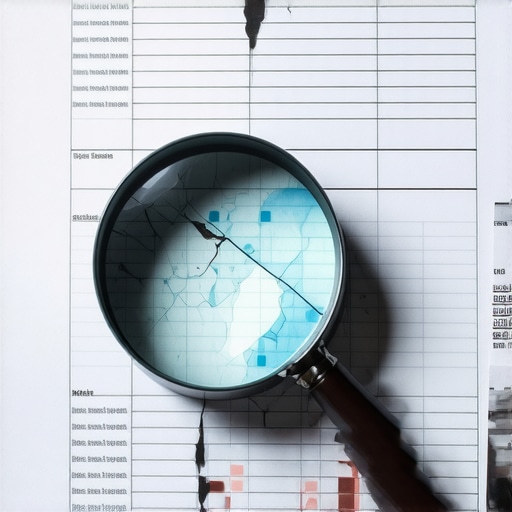
Stop Treating Your Balance Sheet Like a Trophy
Most business owners look at their balance sheet like a mirror. They see what they want to see: a reflection of health, growth, and stability. I am here to tell you that the mirror is cracked. You think you are looking at a solid foundation, but you are likely staring at a graveyard of poor decisions and hidden liabilities. I argue that the standard balance sheet is the most dangerous document in your office because it feels safe. It isn’t. It is a lie by omission.
A balance sheet is like a basement in an old house. On the surface, the floor is swept and the lights are on. But if you never look behind the stacked boxes or under the floorboards, the dry rot is eating the very structure that holds you up. You might think your equity looks great, but if your records are a mess, that equity is a phantom. This is why I constantly remind my clients that why your debt-to-equity ratio might prevent you from getting a loan is a reality check you cannot afford to ignore.
Your Assets Are Often Just Expensive Mistakes
Let’s talk about the ‘Assets’ column. It sounds positive, doesn’t it? In reality, many of those numbers are placeholders for cash you will never see. If you have been ignoring your accounts receivable, you aren’t ‘owed’ money; you are holding onto a bad debt. Why are you still carrying those balances? As I have discussed regarding why your accounts receivable balances are killing your growth, stale numbers are anchors, not fuel. If that money isn’t in your bank account, it shouldn’t be giving you a false sense of security on a piece of paper.
Then there is the chaos of ‘Undeposited Funds.’ This is where many small businesses hide their most embarrassing secrets. You see a number that looks like cash, but it’s actually a collection of duplicate entries and forgotten checks. You are essentially lying to yourself about your liquidity. I have seen how the hidden dangers of leaving old transactions in undeposited funds can lead a company to make massive hiring or purchasing decisions based on money that doesn’t exist. It is a reckless way to run a business.
You might think your software is taking care of this. It isn’t. If your why your QuickBooks balance doesn’t match your bank statement, then your balance sheet is a work of fiction. Stop trusting the dashboard and start questioning the data. If you aren’t reconcile-ing with a sharp eye, you aren’t managing a business; you are managing a fantasy. The truth is often ugly, but it’s the only thing that will save you from a sudden cash flow collapse.
The Rot Starts with Your Reconciliation Habits
The problem isn’t that you lack data. It is that you possess too much garbage data. Most owners believe that if they connect their bank to QuickBooks, the magic of automation handles the rest. This is a delusion. When a firm reports a 15% discrepancy between their ledger and their bank, that isn’t a rounding error; it is a total loss of control. It is a sign that your foundation is built on sand. You aren’t just missing pennies; you are missing the truth. The root cause of your anxiety isn’t a lack of sales. It is the persistent, nagging awareness that you cannot trust your own numbers.
${PostImagePlaceholdersEnum.ImagePlaceholderB}
Liability Is a Predator Hiding in Plain Sight
We often focus on what we have, but we ignore what we owe. Not just the big loans, but the creeping, silent obligations. Look at your ‘Other Current Liabilities.’ If that category is a catch-all for transactions you didn’t know how to categorize, you are sitting on a ticking time bomb. It is a graveyard of unpaid sales tax, unrecorded payroll obligations, and owner draws that will haunt you come April. You see a profit on paper. The IRS sees a target. Your creditors see a risk. This isn’t just poor record-keeping; it is professional negligence that you are committing against yourself. You think you are saving money by skipping professional CPA services or consistent bookkeeping, but you are actually paying a high-interest tax on your own ignorance.
Why Your Software Is Your Biggest Saboteur
Technology was supposed to set us free, but for the average small business owner, it has only provided a faster way to make mistakes. Software doesn’t understand context. It doesn’t know that a transfer between accounts isn’t ‘income.’ It doesn’t know that a double-posted expense is draining your perceived equity. QuickBooks is a tool, not a brain. If you treat it like a set-it-and-forget-it solution, you are effectively letting an algorithm drive your car off a cliff. The data says you are healthy. Your empty bank account says you are starving. Believe the bank account. The software is only as honest as the human auditing it. The discrepancy between your software balance and your actual cash isn’t a ‘glitch’—it is a confession of systemic failure.
The Fatal Cost of ‘Close Enough’
In the world of tax filing, ‘close enough’ is a strategy for those who enjoy audits. I have watched businesses fold not because they lacked a good product, but because they lacked a grip on reality. They operated on vibes rather than verified facts. They saw a high asset total and assumed they were invincible. They were wrong. They were bankrupt long before they closed their doors; they just didn’t have the integrity in their books to see it coming. Stop looking for the silver lining and start looking for the leaks. If you don’t find them, the water will eventually rise above your head.
It is easy to understand why the pragmatic business owner scoffs at the idea of a perfectly reconciled balance sheet. The argument is always the same: ‘I’m running a business, not a library. As long as the bank balance is growing and my P&L shows a profit, why should I care if my Other Current Assets are a bit messy?’ There is a seductive logic to this. In the grind of daily operations, fine-tuning your bookkeeping feels like rearranging deck chairs. The critics will tell you that the balance sheet is just a rear-view mirror—useful for looking back at where you’ve been, but useless for steering the car. They are wrong. They are dangerously wrong. This mindset treats the ledger like a historical archive rather than a diagnostic tool for survival.
The Cash Flow Mirage
The most common defense of messy books is that cash flow is the only metric that matters. If the money is in the bank, the business is healthy. I used to believe this too, until I watched a high-growth service firm declare bankruptcy despite record-breaking sales. Their P&L was beautiful, but their balance sheet was a disaster zone of unrecorded liabilities and phantom assets. They were spending ‘profits’ that were actually unpaid payroll taxes and future refund obligations. When you ignore the balance sheet, you are navigating a ship by looking at the wake it leaves behind, completely oblivious to the iceberg dead ahead. A positive bank balance can be a mask for a terminal illness if your QuickBooks file isn’t anchored in reality.
Critics also argue that the cost of professional CPA services to maintain a pristine balance sheet outweighs the benefits. They view accounting as a sunk cost, a ‘tax’ on doing business. This is the ultimate false economy. By saving a few thousand dollars on high-level oversight, you are choosing to operate in a fog. Without an accurate balance sheet, you cannot calculate your true ROI. You cannot know if your growth is sustainable or if you are simply borrowing from your future self. Those ‘minor’ discrepancies you ignore today are the seeds of an audit or a loan rejection tomorrow. If you think the cost of truth is high, wait until you get the bill for your ignorance.
${PostImagePlaceholdersEnum.ImagePlaceholderC}
The reality is that your P&L is a story, but your balance sheet is the truth. A story can be manipulated. You can delay an expense or accelerate a bit of revenue to make a month look ‘good.’ But the balance sheet is where those manipulations eventually go to die. It is the final reckoning. When people tell you that ‘close enough’ is acceptable for your tax filing or your internal reporting, they are telling you that they don’t value the long-term health of your enterprise. They are prioritizing comfort over clarity. You aren’t just managing numbers; you are managing risk. And in the world of business, the risks you don’t see are the ones that end you. The ‘good enough’ approach isn’t a strategy; it’s a slow-motion surrender to chaos.
We are living in an era of digital convenience that has blinded us to the fundamental laws of gravity. In five years, the business landscape will not be divided by who has the best product, but by who has the most reliable data. The current trend of ‘good enough’ bookkeeping is a slow-motion car crash that most owners are watching from the driver’s seat, refusing to hit the brakes. If you continue to treat your ledger as a secondary concern, you aren’t just risking a messy tax season; you are forfeiting your right to a future. Every unreconciled transaction is a termite in the joists of your enterprise, and by the time you see the floor sagging, the structural integrity is already gone.
What are we waiting for?
Are we waiting for a catastrophic audit to finally value precision? Are we waiting for a bank to laugh us out of the room during a liquidity crisis because our QuickBooks file looks like a finger painting? The broader implication is that financial illiteracy is becoming a terminal condition. We are moving toward a world where automated AI-driven audits and real-time reporting will be the standard. If your books are a mess today, you will be invisible to investors and a target for regulators tomorrow. You are essentially building a house on a fault line and wondering why the windows won’t stay shut. The cost of professional CPA services is a pittance compared to the total loss of your life’s work.
The Point of No Return
The slippery slope begins with a single ignored entry and ends with a business that is functionally dead before the owner even knows it. It is like a pilot flying into a storm while ignoring their altimeter. You might feel like you are at 30,000 feet because your sales are high, but if your liabilities are unrecorded and your assets are inflated, you are actually seconds away from impact. This isn’t just about bookkeeping; it’s about the moral imperative you have to your employees, your family, and yourself to know the objective truth of your situation. You cannot lead a team through a fog of your own making and expect to reach the shore.
${PostImagePlaceholdersEnum.ImagePlaceholderD}
The Cost of Inaction
The tragedy is that this failure is entirely preventable. However, it requires a shift in identity from a ‘hustler’ who ignores the details to a ‘steward’ who masters them. If the status quo of messy record-keeping persists, the small business sector will face a massive Darwinian culling. The businesses that survive will be those that embraced the harsh light of a reconciled balance sheet. Those that don’t will simply evaporate, leaving behind a legacy of ‘what ifs’ and ‘if onlys.’ Your tax filing isn’t a chore; it is a testimony of your competence. Your ledger isn’t a burden; it is your only shield against a volatile economy. If you don’t take control now, the numbers will eventually take control of you, and they won’t be kind.
The Bottom Line
A reconciled balance sheet is the only honest conversation you will ever have with your business. If you have been treating your financial statements as a nuisance to be dealt with once a year, you are effectively flying blind in a hurricane. This isn’t just about ‘cleaning things up’; it is about reclaiming the steering wheel of your life’s work. The first step is acknowledging that a mess exists. You need to initiate the move to clean up a year of back-logged bookkeeping before the weight of those errors becomes a permanent anchor. Waiting for the ‘right time’ is a luxury you no longer possess because the market doesn’t wait for owners who are lost in their own ledgers.
The Twist
The irony is that precision isn’t primarily for the IRS, and it isn’t even for the bank. It is for your own peace of mind. When you invest in reliable CPA services ensuring accurate accounting for small businesses, you aren’t just buying a report; you are buying the ability to sleep at night knowing that your growth is real and your floor isn’t rotting. You can finally stop guessing your cash flow with a rolling 13-week forecast that actually means something because it is built on a foundation of truth rather than fiction. The mess in your books isn’t an accounting problem—it is a leadership failure that you have the power to fix right now.
Your Move
If you want to maximize your tax filing efficiency with expert CPA tips for 2025, you have to start by telling yourself the truth about your numbers today. The era of ‘close enough’ is dead. You either master the data, or you become a footnote in someone else’s success story. Choose the truth. Own your data, or the data will eventually own your downfall.