
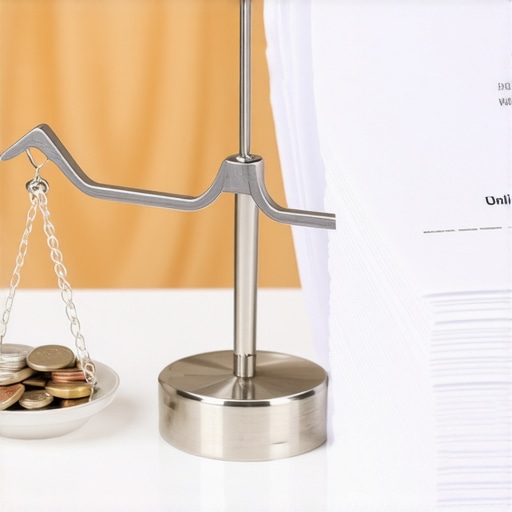
Your Quarterly Tax Payments Are a Financial Time Bomb
You think you are being responsible. You write a check to the IRS every three months, pat yourself on the back, and go back to running your business. You believe that following the so-called safe harbor rules means you are protected. I argue that you are actually setting a trap for yourself. Most entrepreneurs are underpaying their estimated taxes not because they lack the funds, but because they are operating on stale data and a false sense of security. If your business is growing and you are still paying based on last year’s liability, you aren’t being smart; you’re just deferring a crisis. This is why your quarterly taxes shouldn’t be a surprise, yet for most of you, April will be a month of panic and frantic borrowing.
Let’s be blunt: the IRS doesn’t care about your growth story or your reinvestment strategy. They want their cut in real-time. When you rely on the previous year’s numbers, you are essentially trying to drive a car while looking only through the rearview mirror. It works fine as long as the road is straight and nothing changes, but the moment you hit a curve—like a sudden spike in revenue or a new contract—you are headed for a wreck. I see business owners celebrate a record-breaking Q3 only to realize they haven’t adjusted their withholdings. They are building a massive tax debt while they think they are winning. This is exactly why your bookkeeping process is your biggest business risk. If your books aren’t closed and reconciled monthly, your estimates are nothing more than educated guesses.
The Safe Harbor Myth is Killing Your Cash Flow
The safe harbor rule is a crutch for the lazy. Yes, it might stop the IRS from slapping you with an underpayment penalty, but it does absolutely nothing to help you manage the actual cash outflow when the final bill hits. You are essentially taking an interest-free loan from your future self, and trust me, that version of you is going to be angry. You might think you’re being clever by keeping that cash in your operating account, but unless you have the discipline of a monk, that money will be spent on payroll, inventory, or marketing long before tax season arrives. I’ve said it before: why your business is growing but your cash is shrinking is often tied directly to this failure to account for real-time tax liabilities.
So, why are we still doing this? Why are we settling for “good enough” estimates? It’s because real-time accuracy requires effort. It requires QuickBooks mastery and streamlining your bookkeeping so you actually know what you owe today, not what you owed twelve months ago. If you aren’t using reliable CPA services to forecast your actual year-end liability every single month, you are flying blind. Stop treating your tax bill like a surprise birthday party. It’s an inevitable expense, and underpaying it is a choice to mismanage your capital. You need to look at the move that stops you from paying too much in estimated taxes or too little, which is simply staying current with your ledger. The truth is simple: if you don’t know your numbers, you don’t know your business.
The Blind Spot in the Safe Harbor Rule
The core of this crisis isn’t a lack of money, but a total disconnect between your bank balance and your actual liability. Most entrepreneurs treat the safe harbor rule like a protective shield, but in reality, it’s a blindfold. By paying 100% or 110% of last year’s tax, you are ignoring the present reality of your business. If your revenue has jumped 30% this year, you aren’t ‘saving’ money by paying the lower amount. You are simply accumulating a massive, interest-bearing debt that will come due exactly when you are least prepared for it. The problem isn’t the IRS; the problem is your own administrative inertia.
We have seen this pattern repeat in every economic cycle. Business owners mistake cash-on-hand for profit, failing to realize that a significant portion of that cash already belongs to the federal government. They spend. They expand. They hire. Then, when April arrives, they find themselves staring at a six-figure bill they can’t pay. This isn’t just a ‘bad month’—it’s a systemic failure of financial management. When you rely on stale data, you aren’t managing a business; you are gambling with its survival. It is that simple.
${PostImagePlaceholdersEnum.ImagePlaceholderB}
A Math Equation Designed to Fail
Let’s look at the actual cost of this ignorance. The IRS recently pushed the underpayment interest rate to 8%. That 8% isn’t a minor fee; it is a high-interest, predatory loan that you have essentially forced upon yourself. If you are underpaying by $50,000 because you followed the ‘safe’ route of last year’s numbers, you are burning thousands of dollars in interest alone. That money could have gone to a new hire, a marketing campaign, or your own retirement. Instead, it’s gone, vanished into the ether of federal penalties. That 8% rate isn’t just a dip in your earnings; it is a leak in your ship that will eventually sink you if you don’t plug it.
The root cause analysis is clear: business owners prioritize the ‘now’ at the total expense of the ‘next.’ They see the quarterly payment as a nuisance to be minimized rather than a vital metric of health. If your quarterly payments are staying flat while your revenue is climbing, you are failing the most basic test of business literacy. It is a choice to be ignorant. You are choosing the comfort of a smaller check today over the stability of your company tomorrow. You cannot argue with the math, and the math says you are falling behind.
The Psychological Trap of Paper Profit
The most dangerous part of this cycle is the false confidence it breeds. You look at your profit and loss statement and see growth. You feel successful. But that success is a facade if it doesn’t account for the real-time tax bite. You are operating on ‘paper profit,’ which is a fantasy. Real profit only exists after the government has taken its share. By delaying the calculation of that share, you are lying to yourself about the health of your margins. Most of you are running much leaner than you think, and your lack of accurate, real-time bookkeeping is the only reason you haven’t realized it yet.
This isn’t about being ‘careful’ or ‘thorough.’ This is about the fundamental survival of your enterprise. When you treat your tax liability as a year-end surprise rather than a monthly operational expense, you lose the ability to make informed decisions. Should you buy that new equipment? You don’t know, because you don’t know how much of your cash is actually your cash. You are flying through a storm without an altimeter, and you’re surprised when the ground suddenly appears. The safe harbor isn’t a harbor at all; it’s an open sea, and you are currently taking on water.
I know what the skeptics are thinking. Why would any rational business owner hand over a single cent more than the law requires today? The argument for sticking to the safe harbor rule is intellectually seductive: keep your cash, use it to fund inventory, or let it sit in a high-yield account. Why pay the IRS now when you can pay them next April without a penalty? On paper, this looks like a classic case of smart cash management—using the government’s money to fuel your own growth. It is easy to see why people think this is the peak of financial strategy. They view the tax code as a tool to be optimized, and the safe harbor rule as a generous gift from the Treasury.
But that perspective completely ignores the psychological and operational reality of running a scaling company. I used to believe this too, until I saw a flourishing tech firm forced into a fire sale because they mistook their tax liability for working capital. The ‘free leverage’ you think you are gaining is actually a high-interest debt disguised as an administrative convenience. When you choose to pay based on last year’s liability while your current revenue is skyrocketing, you are effectively taking out a loan from your own future. And unlike a bank loan, this one doesn’t have a repayment schedule—it has a cliff.
The Dangerous Illusion of Disposable Cash
The critics argue that as long as the books are balanced by the end of the year, the timing doesn’t matter. They are wrong. It matters because most business owners do not have the discipline to segregate those funds in a way that prevents them from being ‘borrowed’ for operational needs. When that cash stays in your main operating account, it influences every decision you make. You feel richer than you are. You make hiring decisions based on a bank balance that is artificially inflated by 20% or 30%. By the time you realize that money was never yours to begin with, you have already committed to overhead you can’t actually afford.
${PostImagePlaceholdersEnum.ImagePlaceholderC}
This is where the reliance on legacy accounting fails you. If you are waiting for your annual tax filing to see the damage, you are already six months too late. The sophistication required to manage that ‘interest-free loan’ from the IRS doesn’t exist in most small-to-mid-sized businesses. You need more than just a spreadsheet; you need an integrated ecosystem of QuickBooks and professional oversight to see the cliff before you drive over it. Without real-time visibility, your ‘smart’ tax strategy is just a gamble on your future liquidity.
The uncomfortable truth is that the safe harbor rule wasn’t designed to help you grow; it was designed to provide the IRS with a predictable floor of revenue while letting them collect the true balance—plus interest—later. When you follow this path, you aren’t outsmarting the system. You are becoming its most predictable victim. You are choosing the comfort of a smaller quarterly check over the hard reality of your actual margins. Stop pretending that you are ‘leveraging’ your taxes. You are simply hiding from your own numbers, and in the world of business, what you don’t know won’t just hurt you—it will end you. It is time to stop looking for loopholes and start using reliable CPA services to confront your ledger.
The danger here is not merely a surprise bill from the government; it is the systemic erosion of your business’s structural integrity. When you ignore the real-time reality of your tax debt, you are effectively building a high-rise on a foundation of shifting sand. To the outside observer, the building looks magnificent—your revenue is up, your team is expanding, and your brand is gaining traction. But beneath the surface, the weight of the structure is slowly crushing the very base that supports it. If this trend continues, we aren’t just looking at a few bankruptcies; we are looking at an entire generation of entrepreneurs who will find themselves insolvent at the exact moment they should be celebrating their greatest successes.
What are we waiting for?
If you wait for the annual tax season to understand your liability, you are already participating in a slow-motion car crash. Think of your business like a high-performance jet. You wouldn’t dream of flying it if the fuel gauge only updated once every six months. Yet, that is exactly how most of you manage your cash flow. You are flying through turbulent economic skies, making life-altering decisions for your employees and your family based on data that is fundamentally broken. This is a choice to prioritize the comfort of the status quo over the survival of your legacy. In five years, the businesses that survive will not be those with the highest revenue, but those with the most disciplined financial clarity. The era of ‘growth at any cost’ is over, and it is being replaced by the era of the transparent ledger.
The Point of No Return
The stakes are higher than your bank balance. We are talking about the loss of agency. When the IRS eventually knocks with a demand that exceeds your liquid assets, you lose the ability to dictate the terms of your future. You stop being a CEO and start being a debtor. You stop looking for opportunities and start looking for ways to avoid the inevitable. This creates a psychological weight that stifles innovation and breeds a culture of fear within your leadership team. It is a contagion that spreads from your accounting software to your corporate culture. ${PostImagePlaceholdersEnum.ImagePlaceholderD}
A Choice to Make
The path forward requires a total rejection of the safe harbor mentality. It requires you to look at your QuickBooks not as a chore to be completed for your accountant, but as a real-time dashboard of your operational freedom. If you don’t take control now, the market will eventually take it from you. The future belongs to those who confront their numbers with brutal honesty. Those who continue to hide behind the safe harbor rule are simply waiting for the inevitable moment when the tide goes out and everyone sees who has been swimming naked. This is the moment where you decide if you are building a temporary monument to your ego or a permanent engine for wealth. The warning has been issued. The math is clear. The only remaining variable is your willingness to act before the clock runs out.
The Final Verdict
The safe harbor rule is not a sanctuary; it is a delay tactic that breeds financial rot. Ignoring your real-time tax liability is not a strategy; it is a slow-motion liquidation of your future. If you are serious about scaling, you must move beyond the ‘good enough’ approach of last year’s numbers. This means adopting reliable CPA services that prioritize proactive forecasting over reactive filing. The move that truly stops you from paying too much in estimated taxes—or far too little—is the same move that gives you operational clarity: real-time bookkeeping. This is why your bookkeeping process is your biggest business risk. You cannot lead a company if you are terrified of its balance sheet.
${PostImagePlaceholdersEnum.ImagePlaceholderE}
The Final Twist
The ultimate irony is that by trying to keep more cash in your pocket today through underpayment, you are ensuring you have less of it tomorrow when you’ll actually need it to survive. Most entrepreneurs think they are outsmarting the system by holding onto tax dollars, but they are actually just starving their future selves of liquidity. Real QuickBooks mastery and streamlining your bookkeeping isn’t about satisfying the IRS; it is about giving yourself the permission to spend your remaining cash without the ghost of a future tax bill haunting your decisions.
Stop playing chicken with the Treasury and start owning your ledger. Your business is either built on facts or on a countdown to a crash. Choose the facts.