
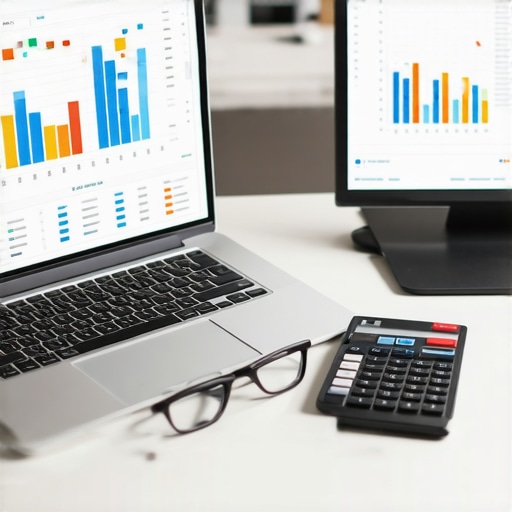
Your QuickBooks Dashboard Is Lying to You
Stop treating your accounting software like a magic wand. You pay your monthly subscription, you link your bank feeds, and you assume the profit and loss report you print out is the absolute truth. It isn’t. In fact, most of the time, it is a fiction you have accidentally written yourself. I have seen business owners walk into meetings with a QuickBooks report only to have their CPA tear it down in five minutes. You think the software is broken? I argue that your understanding is flawed.
The software is a tool, not a brain. It is a high-end stethoscope in the hands of someone who does not know how to find a pulse. You hear noise; the professional hears a murmur that indicates a failing heart. This is why your general ledger is showing a difference you can’t find when you try to do it alone. You see numbers on a screen. Your accountant sees liabilities, timing differences, and compliance risks that you have completely overlooked.
The Truth Is Not Found in a Bank Feed
The biggest lie the tech industry ever sold small business owners was the idea of automation. You think because a transaction is matched in your bank feed, it is correct. It is not. A computer does not understand the nuance of a loan repayment versus an owner’s draw. It does not know if a meal was a legitimate business expense or just you buying lunch for your kids. This is exactly why your CPA is asking for your bank statements again despite your protests that everything is in the cloud. They know the feed is incomplete. They know the feed skips things. And they know you have probably ignored the red flags.
When your CPA looks at your books, they are not just looking at transactions; they are looking at tax law and GAAP principles. You are looking at bank balances. This fundamental disconnect is why your cash basis P&L looks different than your tax return. One is a record of what happened; the other is a legal document formatted for the government. If you want accuracy, you must stop clicking okay on every suggestion the software makes. Blindly following an algorithm is how you end up in an audit.
Let’s talk about the mess you have likely made with your categories. Most people have a miscellaneous account that looks like a digital junk drawer. If your chart of accounts has hundreds of entries, you are not being detailed; you are being confusing. This is why your QuickBooks chart of accounts is too complex and why you cannot make sense of your own growth. You think you are being thorough. I believe you are just creating noise. True financial clarity requires QuickBooks mastery, not just a monthly login and a prayer.
You might think you are saving money by doing the data entry yourself. You are wrong. You are just creating a massive cleanup bill for February. When you hand over a finished set of books that is riddled with errors, your accountant has to unpick every single thread before they can even start the tax filing process. You are paying for their time twice: once to fix your mistakes and once to do the job you hired them for. This is the hidden tax of being efficient. The gap between your screen and their final report is often the difference between why your business is growing but your cash is shrinking. Stop hiding behind the automated labels and realize that professional CPA services are about expert interpretation, not just clicking a mouse.
The root of the problem is not a software glitch or a server error. The problem is the fundamental misunderstanding of what accounting software is actually designed to do. Intuit and its competitors are in the business of selling convenience, not compliance. They have marketed the idea that anyone with a smartphone can be their own CFO. They lied. They told us that the bank feed was the final word, that the AI was smart enough to know your business, and that your participation was merely a formality. This is the ultimate root cause: we have replaced professional judgment with a ‘Match’ button, and we are paying the price in cold, hard cash.
The Myth of Zero-Touch Accounting
Algorithms are built on probability, not tax code. When you click that green button to accept a suggested transaction, you are not performing bookkeeping; you are gambling. Let’s look at the reality of the situation. If 30% of your automated transactions are miscategorized—which is a conservative estimate for the average DIY user—that isn’t just a minor statistical deviation. It is a catastrophic failure of your financial data. That 30% error rate represents a complete loss of visibility into your actual margins. You aren’t just missing a few deductions; you are effectively driving a car with a speedometer that only works whenever it feels like it.
${PostImagePlaceholdersEnum.ImagePlaceholderB}
The software sees a transaction at a gas station and suggests ‘Travel Expense.’ It doesn’t know you bought a car wash for a personal vehicle. It sees a deposit and suggests ‘Sales Income.’ It doesn’t know that was actually a personal loan you took out to cover payroll. The software does not care about your tax liability. It only cares about clearing the queue. This is why the ‘Follow the Money’ rule is so vital. Who benefits when you rely solely on the software? The software company, which keeps your monthly subscription active by making you feel like you’ve ‘finished’ your books in ten minutes. Meanwhile, the IRS is waiting for the inevitable discrepancies that your ‘automated’ system created.
The False Security of Bank Feeds
A reconciled bank account is not the same thing as a correct set of books. You can balance your checkbook to the penny and still be committing tax fraud. This is the trap. You see a zero difference on your reconciliation report and feel a sense of accomplishment. You shouldn’t. A reconciled account simply means the bank and the software agree on the amount of money that moved. They do not agree on the nature of that money. This is the difference between data entry and accounting. Data entry is clerical. Accounting is interpretive. If you cannot explain the ‘why’ behind a transaction, the ‘what’ is completely irrelevant.
We have entered an era where business owners are drowning in data but starving for information. Your dashboard is a vanity metric. It gives you a pretty graph and a colored pie chart, but if the underlying data is categorized by an algorithm that doesn’t know your industry, those charts are worse than useless—they are dangerous. They lead to overconfidence. You see a high profit margin on the screen and decide to hire a new employee, only to find out three months later that your ‘profit’ was actually just misclassified owner contributions. The software didn’t fail you; your trust in it did. Real financial clarity is not automated. It is earned through the rigorous application of accounting principles that a piece of code will never truly master.
The tech-evangelists have a compelling argument: why pay a human to do what an algorithm does in milliseconds? They argue that we are simply guarding the gates of a temple that has already been raided by the cloud. They claim that for the modern, digital-first business, the old guard of CPAs is just an expensive vestige of a paper-heavy past. They’ll point to the API integrations and the ‘intelligent’ matching as proof that the professional barrier to entry has vanished. And on the surface, they are right. The physical labor of recording a transaction has been commoditized. If you are just looking for a list of things you bought, the machine is faster. But they are confusing the act of recording with the art of reporting. It is a fatal distinction that costs small businesses billions every year in missed opportunities and audit penalties.
I used to believe this too, until I spent a full tax season watching ‘automated’ books collapse under the weight of a single IRS inquiry. I saw a client lose their entire R&D tax credit because their ‘smart’ software categorized every software developer salary as a general office expense. The software did exactly what it was told—it matched a payment to a name—but it lacked the contextual intelligence to understand the tax implications of that classification. The business owner saved two hours a month on bookkeeping but lost sixty thousand dollars in credits. That isn’t efficiency; it’s professional suicide by proxy. You cannot automate the strategic placement of assets or the nuanced interpretation of tax code. True CPA services involve a level of foresight that a line of code simply cannot replicate.
The defenders of DIY accounting often point to the ‘democratization of data.’ They believe that by removing the professional from the daily workflow, they are empowering the entrepreneur. They see the accountant as a bottleneck—a person who asks too many questions and charges too much money to tell you what you already know. In their view, the software has leveled the playing field. It has taken the ‘mystery’ out of the numbers. I can respect that desire for autonomy. Every business owner wants to feel in control of their destiny. But there is a massive difference between having access to your data and having an understanding of your financial position. A library card gives you access to every medical textbook in the world, but it does not make you a surgeon.
The Speed Obsession
The trap is the feeling of ‘done.’ When you clear your bank feed, the software gives you a dopamine hit. You get a little badge or a message saying ‘You’re all caught up!’ This is the most dangerous moment for a business owner. You think ‘done’ means ‘correct.’ In reality, ‘done’ just means your bank balance matches your ledger. It says nothing about whether your depreciation schedules are right, if your inventory is valued correctly, or if you have accidentally triggered a nexus requirement in another state. The software is designed to make you feel good, not to make you compliant. It prioritizes the user experience over the reality of tax filing obligations. This false sense of security is exactly what leads to the ‘junk drawer’ effect in your chart of accounts.
${PostImagePlaceholdersEnum.ImagePlaceholderC}
Critics argue that CPAs are just trying to justify their hourly rates. They say we overcomplicate things to keep ourselves relevant. If accounting were just about basic addition, they would be right. But accounting is not math; it is a legal framework. Your software knows that two plus two equals four. It does not know that for tax purposes, that four might be deferred, capitalized, or entirely non-deductible based on your specific entity structure. It does not understand the ‘intent’ behind a transaction. It does not know if that five-hundred-dollar charge was a necessary equipment upgrade or a personal expense that will trigger an audit. When you automate your judgment, you are abdicating your responsibility as a business owner. You are handing the keys of your financial future to a script that was written to maximize ‘clicks’ and ‘engagement,’ not your net worth. The idea that a SaaS subscription can replace a decade of specialized education is the most expensive myth in the modern economy. The problem with this ‘democratization’ is that it assumes all data is created equal. Bank feed data is raw, noisy, and frequently misleading. It ignores the accrual adjustments that actually tell you if your business is healthy. When you skip professional oversight, you aren’t just saving on fees; you are sacrificing the only person in your business whose job is to look at the numbers with a cold, objective, and legally-informed eye. You are trading the long-term health of your company for the short-term satisfaction of a clean dashboard.
We are currently witnessing a silent erosion of financial literacy among small business owners. By delegating our critical thinking to a subscription service, we are not just saving time; we are surrendering our authority. This matters right now because the gap between what you think you have and what you actually own is widening with every ‘auto-match’ you confirm. We are building a generation of entrepreneurs who are financially illiterate in their own businesses, mistaking a software notification for a strategic victory. If this trajectory continues, the small business sector will face a reckoning that no algorithm can fix.
What Happens When the Algorithm Fails You?
In five years, the landscape of tax enforcement will look nothing like the manual audits of the past. We are heading toward an era of ‘Algorithmic Compliance,’ where the IRS and state agencies will use their own artificial intelligence to scan your digital footprint in real-time. When that happens, ‘the software told me to do it’ will be a laughably insufficient defense. The machine learning tools used by regulators will be far more sophisticated than the user-friendly interface you use to track your expenses. They will find the patterns of misclassification, the hidden personal expenses, and the structural errors that you have allowed to accumulate like digital plaque in your general ledger.
${PostImagePlaceholdersEnum.ImagePlaceholderD}
Think of your accounting software as a sophisticated autopilot system in an airplane. It is an incredible piece of engineering designed to handle the monotonous aspects of flight. However, a pilot who stares at the screen and ignores the actual horizon is a danger to everyone on board. If the altimeter is calibrated incorrectly, the autopilot will fly you straight into the side of a mountain with perfect, automated precision. Most business owners are currently flying through a storm with a broken altimeter, celebrating how smooth the ride feels because they can’t see the ground rushing up to meet them. They are confusing a lack of turbulence with a safe flight path.
The Point of No Return
The stakes go beyond a simple tax bill. This is about the fundamental viability of your enterprise. When you lose the ability to see your true margins because of messy bookkeeping, you lose the ability to make rational decisions about growth, hiring, and investment. You are effectively operating in a hallucination. The tragedy of the modern DIY accountant is that they often don’t realize they are in trouble until they try to sell their business or apply for a major loan. At that moment, the ‘clean’ dashboard they’ve spent years maintaining is revealed to be a house of cards. The professional due diligence process is a cold shower that many businesses never recover from.
We are at a crossroads where we must decide if we value the convenience of a button more than the security of our livelihoods. The illusion of ‘zero-touch’ accounting is a siren song leading us toward a reef of audit penalties and collapsed valuations. The warning is clear: financial integrity cannot be outsourced to a script. It requires a human eye, a professional background in CPA services, and the courage to admit that a computer program is not a substitute for expert judgment. If we continue to prioritize the dopamine hit of a cleared queue over the rigorous accuracy of a tax filing, we aren’t just being modern—we are being reckless. The window to correct these digital fictions is closing, and the cost of inaction is a price no business can afford to pay.
The Price of Automated Ignorance
The time has come to stop viewing your accounting software as a set-it-and-forget-it solution. Every time you blindly accept a bank feed suggestion, you are delegating your legal responsibility to a line of code that doesn’t know the difference between a growth investment and a personal liability. Understanding the secret to making your bookkeeping audit proof requires you to stop trusting the match button and start trusting human oversight. If you continue to treat your finances like a video game where clearing the queue equals winning, you will eventually find yourself in a reality that no software update can fix.
Reclaim Your Financial Sovereignty
True professional CPA services are not about the past; they are about protecting your future. By the time you realize your tax filing is a mess of misclassifications and missed opportunities, the damage is often already done. You must maximize your tax filing efficiency by integrating expert strategy into your daily workflow, rather than treating it as a once-a-year panic. The software provides the data, but only a human provides the truth. The software is your map, not your driver.
${PostImagePlaceholdersEnum.ImagePlaceholderE}
You have a choice to make before the next tax season arrives. You can continue to hide behind the convenience of a smart dashboard, or you can take the necessary steps to achieve perfect accuracy in accounting with trusted CPA techniques. The cost of a professional is a known quantity; the cost of an undetected error is an infinite liability. Stop gambling with your business and start investing in the clarity that only real expertise can provide. Your dashboard is lying to you, but your bank balance doesn’t have to. Contact us today to see the difference between a list of numbers and a strategy for success.
Accounting software is a high-speed vehicle with no driver; without professional oversight, you are just accelerating toward a financial wreck. The twist is that these tools were never designed to keep you compliant; they were designed to keep you subscribed. Stop clicking Match and start making decisions.