
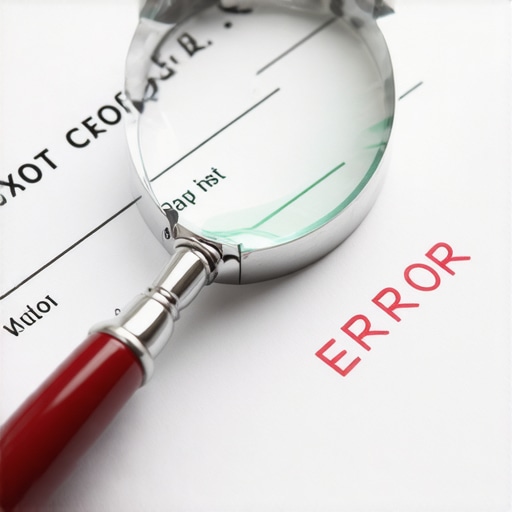
Your Credit Score Is a Vanity Metric and the Bank Knows It
You spent months chasing a higher FICO score. You paid down every card. You waited. Then you applied for that expansion loan and got hit with a rejection faster than a bad pitch on a reality show. You want to blame the economy. You want to blame the greedy lenders. But I am here to tell you the cold, hard truth: your credit score did not fail you. Your sloppy bookkeeping did. Lenders are not looking at your score to see if you are a nice person; they are looking at your financial statements to see if you are a competent operator. If you think passion pays the bills, you are in the wrong business.
The Financial Statements Are a Mirror You Are Afraid to Look At
The one mistake that kills your application every single time is presenting financial data that does not match reality. It is a disaster waiting to happen. Most owners think they can DIY their way through a loan application using a spreadsheet they have not updated since July. That is a mistake. A business credit application with bad books is like a restaurant with a glossy, expensive menu but a kitchen full of expired meat. The lender is the health inspector. The moment they see a discrepancy between your internal reports and your official tax filing, the deal is dead. I argue that financial statements are the real key to getting a business loan, yet most entrepreneurs treat them like an afterthought. You might think your local banker cares about your ‘vision,’ but you are wrong. They care about your debt-service coverage ratio.
Stop Trusting Your Gut Over Your Ledger
Why are we still pretending that software alone solves the problem? QuickBooks is a tool, not a savior. If you do not know why your reports look different than your CPA’s, how can you expect a bank to trust your numbers? Banks want to see consistency. They want to see that your bookkeeping is handled by professionals who understand the stakes. Relying on CPA services ensuring accurate accounting is not a luxury for when you are ‘big enough.’ It is the prerequisite for getting big in the first place. You need to achieve perfect accuracy in accounting before you ever fill out a loan form. If your bank balance does not align with your profit and loss statement, you look like an amateur. And banks do not lend money to amateurs. They lend to people who have control over their data. Are you in control, or are you just guessing?
The Myth of the Golden Number
The problem is not that you lack capital; the problem is that you lack clarity. Everyone wants to talk about their 780 FICO score as if it is a golden ticket to the chocolate factory. It is not. It is a participation trophy. Lenders do not look at that number and think “Safe bet.” They look at it and think “He pays his personal credit cards on time.” That tells them nothing about whether your business can survive a 15% increase in cost of goods sold or a three-month delay from a major client. The root cause of your rejection is not a low score; it is the fact that your Balance Sheet is a work of fiction. They see right through it.
Consider the data. When industry reports suggest that nearly half of small business loan applications are declined due to “unverifiable financial information,” that 50% rejection rate is not a clerical error; it is a structural wall. You handed the bank a shovel, and they used it to bury your application. If your internal QuickBooks reports do not match your tax filing to the penny, you are telling the lender you do not know where your money is. They do not care about your hustle. They care about your bookkeeping integrity.
${PostImagePlaceholdersEnum.ImagePlaceholderB}
A Systematic Failure of Internal Data
Banks are risk-averse by design. They operate on the principle that the past predicts the future. If your past—as documented in your ledger—is a chaotic mess of uncategorized expenses and “owner draws” that look like personal shopping sprees, you are a high-risk liability. It is that simple. You might think your CPA services ensuring accurate accounting are just about avoiding an audit, but they are actually your most powerful marketing tool. A clean set of books tells a story of a controlled, predictable environment. A messy set of books tells a story of a fire waiting for a match.
They lied. They told you that as long as the revenue was growing, the details did not matter, but in the end, the details are the only thing that keeps the lights on. Lenders are not your partners; they are your auditors. Every time you fail to reconcile an account, you are effectively telling the bank that you are too disorganized to be trusted with their capital. It is not a matter of if they will find the error, but when.
Where the Math Actually Fails
We need to stop pretending that software is a substitute for expertise. You bought the subscription. You linked the bank accounts. You thought you were done. You were wrong. Automating a mess only creates a faster mess. When you fail to achieve perfect accuracy in accounting, you are essentially flying a plane with a broken altimeter. You think you are at 10,000 feet, but the ground is rushing up to meet you. The bank sees the ground. They see the QuickBooks errors you ignored because you were too busy “scaling.” They see the lack of reconciliation. They see the amateurism that you tried to hide behind a sleek pitch deck.
It is time to face the mirror. The reason you are not getting funded is not because the system is rigged against the little guy. It is because the little guy refuses to act like a professional. Professionalism starts in the ledger, not the boardroom. If you cannot prove your profit on paper, you do not have a profit; you have a hobby. And banks do not fund hobbies. They fund systems. They fund the ability to repeat success. When your bookkeeping is a series of guesses, you are telling the world that your success was an accident. Banks do not bet on accidents.
It is easy to see why entrepreneurs obsess over that three-digit number. The conventional wisdom says that a high FICO score is the ultimate credential, a badge of honor that proves you are a ‘good’ borrower. I used to believe this too, until I watched a developer with a near-perfect 810 score get rejected for a simple line of credit because his tax filing did not align with his bank statements by even a few thousand dollars. The bank did not see a responsible adult; they saw a chaotic operator who could not be trusted with a five-year projection. The credit score is a prerequisite, sure, but it is a shallow one. It measures how well you pay your phone bill, not how well you manage a multi-million dollar enterprise.
The steel-man argument for the credit score is that it provides a quick, standardized risk assessment. Lenders use it to triage the thousands of applications they receive. But here is the problem: relying on personal credit to secure business capital is like using a driver’s license to prove you can fly a commercial jet. They are fundamentally different skill sets. Your bookkeeping reflects the reality of your operations, while your credit score reflects your relationship with consumer debt. One is about personal reliability; the other is about operational excellence.
${PostImagePlaceholdersEnum.ImagePlaceholderC}
The FICO Illusion
Critics will say that in the world of automated lending, the algorithm is king. They argue that if you hit the magic number, the money flows. That might be true for a five-thousand-dollar credit card, but for real business growth—the kind that requires six or seven figures—the algorithm is just the receptionist. The real decision-makers are looking at the ‘boring’ stuff. They are looking at whether you use QuickBooks as a data entry tool or as a strategic compass. They want to see that your CPA services have scrubbed your data for inconsistencies that a personal credit report would never catch.
The common trap is thinking that a high score buys you a pass on sloppy data. It does not. In fact, a high score combined with a disorganized ledger makes you look even worse. It suggests that you have the resources to be professional, yet you choose to be negligent. When your tax filing shows a loss but your internal reports show a massive profit, the banker sees a tax-evader or a liar. Neither is a good candidate for a loan. You cannot hide behind a vanity metric when the underlying structure is rotting. It is time to stop polishing the trophy and start fixing the engine. Real lenders do not care about your ‘potential’ when the current reality is a mess of unreconciled accounts.
The window of opportunity for the entrepreneur who treats their ledger like a personal diary is slamming shut. We are moving toward a financial reality where transparency is not a choice, but a mandatory requirement for entry into the economy. If the current trajectory of automated underwriting and algorithmic vetting continues, the five-year outlook for small businesses with sloppy data is grim. Lenders are already training their models to flag discrepancies between a QuickBooks report and a federal tax filing with zero tolerance for human error. The margin for ‘figuring it out as you go’ has evaporated.
What happens when the money dries up?
The consequence of ignoring your bookkeeping integrity today is total exclusion tomorrow. Imagine a world where your access to capital is determined by a machine that views a single unmapped expense as a fatal character flaw. This is the inevitable evolution of risk management. When you fail to utilize professional CPA services now, you are not saving money; you are effectively blacklisting your own future. The banks are no longer interested in your story; they are interested in the digital trail of your competence.
Trying to scale a business with bad books is like trying to build a skyscraper on a foundation of damp cardboard. It might look impressive from the street while the sun is out, but the moment the heavy clouds of a recession roll in, the weight of your debt will crush the structure because the base was never solid. You cannot build a legacy on a lie, and in the eyes of a bank, an unreconciled ledger is the ultimate dishonesty. It signals that you are not in control of your own ship.
${PostImagePlaceholdersEnum.ImagePlaceholderD}
The Point of No Return
The cost of inaction is the death of your ambition. While you wait for a better time to get organized, your competitors are already cleaning their data and securing the lines of credit you will need to survive the next downturn. This is a binary choice: you either professionalize your accounting today or you accept that your business has a shelf life that ends the moment your cash reserves dip. The bank is not coming to save you; they are coming to see if you are worth saving. If you cannot prove your numbers, you simply do not exist in the eyes of the modern financial system.
We are witnessing the Darwinian evolution of the small business. The ones who survive are not necessarily the ones with the best product, but the ones with the most reliable data. Every time you ignore a bank reconciliation or delay your tax filing, you are handing your market share to someone who took their bookkeeping seriously. The stakes are no longer just about a loan rejection; they are about your ability to remain a viable player in an increasingly unforgiving market. The time for guessing is over.
The Reckoning of the Unreconciled
The time for hiding behind a shiny FICO score has officially ended. If you want the capital to grow, you have to stop treating your bookkeeping like a hobby and start treating it like the heartbeat of your enterprise. Lenders are tired of the excuses, and the market is tired of the amateurs. You either professionalize your data now, or you wait for the day your lack of tax filing consistency finally catches up with your ambitions. This is not about being ‘good with numbers’; it is about being a legitimate business owner who can read your own balance sheet like a banker before you ever walk through their doors.
${PostImagePlaceholdersEnum.ImagePlaceholderE}
The Mirror Does Not Lie
You can ignore the discrepancies between your bank statements and your reports for a few more months, but you cannot ignore the reality of a rejected loan application. This connects to my core belief that you must reconcile every month instead of once a year if you expect to maintain any semblance of control. The ‘Golden Number’ was always a distraction, a way for you to feel productive while the engine of your business was leaking oil. Your QuickBooks is either a tool for strategic growth or a record of your eventual failure. The choice of which one it becomes rests entirely on your willingness to ensure accurate accounting through professional CPA services.
Stop Guessing and Start Growing
The final verdict is simple: your credit score gets you to the door, but your financial integrity is what lets you inside. The twist you probably did not see coming is that the more ‘automated’ the world becomes, the more the human oversight of your data matters. Machines catch the errors you think you are hiding. If you want to scale, you need to maximize your tax filing efficiency with a level of precision that makes an auditor’s job boring. The era of the ‘gut-feeling’ entrepreneur is over. The era of the data-driven operator has arrived. Put down the credit monitoring app, open your ledger, and face the truth. Your future depends on what you find there.